Frank Wildhorn is a topic of conversation I tend to avoid among theatre enthusiasts. People love him or hate him, it seems. Critics point out his lyricist choices, and this might be one reason why I love non-english versions of his shows. What are they saying during the Prolog? No idea! But it sounds great! I have to be in a certain mood to listen to Wildhorn, and, as you’ll read in a moment, have very mixed feelings about him as a composer.
Count of Monte Cristo is an obvious choice for Wildhorn, the composer known for turning lush literature classics into colorful, outrageous, and lavish scores. Does this show have Wildhorn’s signature power ballad duets with beautiful harmonies (but Linda Eder should actually be singing everything)? Yes! It does. But I can eat up Wildhorn’s melodies like candy, full disclosure. He is my Broadway bubble gum.
Ein Leben Lang, the opening power ballad, sounds like it was cut from Jekyll and Hyde, but it’s a lovely enough melody for me to give it a pass. The musical spaces between the inevitable power ballads are what I find most interesting about this album. Wildhorn steps, ever so slightly, out of his music(al) box, and delivers something more varied. And again, it’s in German so the lyrics are wonderful (I don’t speak German).
I will admit that I typically don’t listen to a Wildhorn song here and Wildhorn song there. When my musical urges point toward Wildhorn, I usually opt to listen to the entire show, rather than highlights, or skipping around. His songs do sometimes get lost within themselves, but I do think the overall musical narrative is consistent with Wildhorn’s brand, and I don’t think that it’s a bad thing.
The track Könige starts with a simple standard power ballad melody, but builds into, what turns into, the climax of the score. I assume it’s the Act 1 Finale. It starts and continues as a solo number, and a second man enters the musical dialouge by the end of the second verse. As the song builds, with no vocal harmonies thusfar, there is a key change near the end that initiates a beautiful moment between the two men singing. They break from their solo verses, and begin a call and response version of the chorus, each man harmonizing with the others’ response, until the song resolves and you are left with chills down your spine. Side note: this German Swiss recording of this particular song blows all the other versions of this song out of the water.
I am aware of the criticism that Wildhorn receives, but I do find his music interesting enough to listen through an entire album, multiple times. I mean from Jekyll & Hyde to Dracula to Civil War, these melodies of his get stuck in my head quite a bit, and I don’t mind listening through an entire Wildhorn album when I get the power ballad itch.
If you haven’t heard Wildhorn’s version of Count, check the link above.
xoxo AB
German Musicals
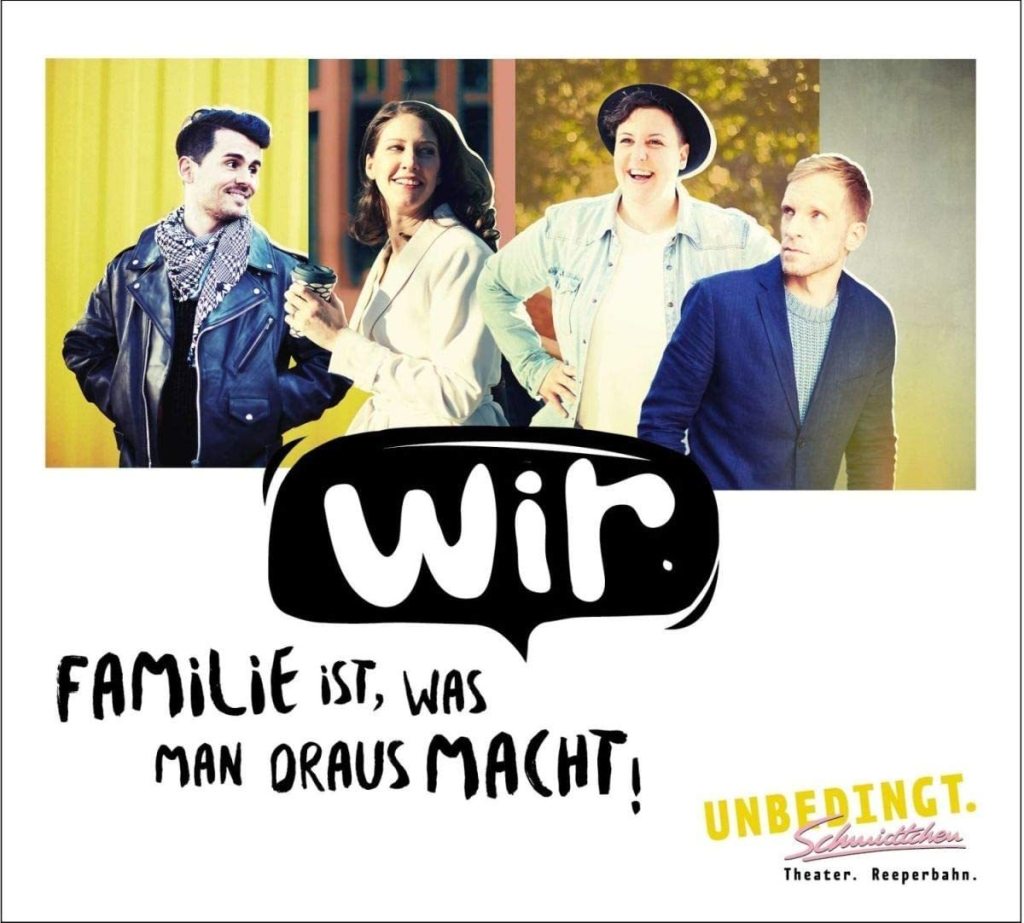
Wir: Familie ist, was Man Draus Macht (2020 Original Hamburg Cast Recording)

Happy New Year! I welcome 2021 with open arms, and I look forward to discovering so many albums that have been released under extreme conditions of 2020.
I happened across this album by certain accident but as well by happy surprise. Wir, a musical by Lukas Nimscheck, tells the story of two gay couples and their adventures in child adoption. I will admit, that is the extent of my plot knowledge, as my understanding of German is terrible non-existant.
From the opening number Heute ist dieser Tag (Today is the Day), we enter an electropop 1980s “99 Luftballons” keyboard rift fever-dream of sorts. The feeling of floating through a modern, fast paced, driving, melodic story has just begun. The opening number features some relevant dialog that I’m sure is important, but I’m too busy listening to the beats and the autotuned church bells playing Here Comes the Bride. For anyone who enjoys albums with total electronic auditory immersion, put on some nice headphones and turn up the volume. Take a nice walk through the city and let this album serve to add order to an otherwise disorderly world.
With the absence of most theatre in the year 2020, many of us have sought refuge in the comfort of cast recordings and proshots. This cast recording gives us some great musical storytelling along the same vein as 2016’s American Psycho, driven by electro beats, backup vocals, synthesizer magic, etc.
In a way, this recording falls into a very narrow genre sub-category, with few albums falling into the same sub-type, musically. And we’ve seen many recordings as such in 2020: Amelie 2020 London, Emojiland 2020 Off-Broadway, Black Friday 2020 Starkid, Ratatouille 2020 TikTok, among others.
2020 has forced almost every industry to immediately adapt and change it’s production strategy, with musical theater being no different if not worse off, with a full year of darkness. I assume history will look back at this moment in time as a pivotal moment in musical theatre, with the future of the story being unknown to me. But I am looking forward to seeing what it looks like. Wir: Familie ist, was Man Draus Macht makes me feel and hear a glimpse of what’s to come. Productions like this are actively writing the history of musical theater.
This album has served a very welcome surprise at the beginning of 2021. With the backdrop of political and cultural turmoil in my country, an international pandemic at its worst, and no reopening of Broadway in near sight, at least I have albums like this to serve a distraction and get me excited for the future.
Available:
https://amzn.to/2XrHip5
On Spotify:
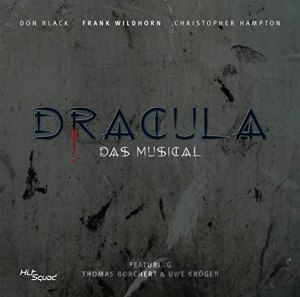
Dracula (2008 Original Graz Cast Recording) [Wildhorn]
Ladies and Gentlemen,
First and foremost, it’s been a while since reading, watching, or listening to anything related to Dracula, so this review is a long time coming. I am slightly familiar with the English language concept album that was released two years prior to this productions. I usually prefer Wildhorn’s “international” casts over West End or Broadway-bound albums. Maybe because the lyrics are not one of the major reasons I listen to a Wildhorn album (for contrast, I find listening to Sondheim or Bernstein shows in foreign languages as I am so in love with the libretto.) I usually describe Wildhorn shows as page turners, in that each love duet and baritone solo leaves you wanting just a little more, and, for me, he often delivers (minus his attempt at his musical Wonderland.)
Act I
I tend to be a harsh critic of opening numbers, so I tried to be objective in my review of the beginning parts. It begins with some whispers and minor violin riff into a decent baritone/tenor solo, mirroring Wildhorn’s pièce de résistance Jekyll and Hyde from 1997. After a soaring love duet, Wildhorn starts throwing some rhythmic curve balls to the listener. I expect a Wildhorn score to be a “page-turner-edge-of-you-seat,” as it is a genre or style he is best at. His constant back and forth between 6/8 and 4/4 is always a treat. I will admit, as we start to hear quite a few fast 6/8 waltz bits near the end of act 1, I’m left curious if the second act will mimic the first. The show draws its listeners in similar to Jekyll in its beautiful and sad duets. The first act takes a couple songs to draw me in completely, but it succeeds by track 4 or so.
The Act 1 finale: we are met once again with a powerful duet between Dracula and Lucy. I enjoy it enough to give the Act 1 Finale a second listen before “intermission.” What I like most about the finale is the electric guitar tap-tap-tapping that draws you into a brass, drumset, electric guitar soundscape. It begins a Dracula solo, the chorus moves into 4/4, of course, and keeps us on our toes, and Lucy enters about a minute before the last note. Just in time to wrap up this Act and give us some juicy Wildhorn harmonies with rhythmic changes throughout. A page turner indeed!
[Intermission]
(I had no idea if that was the Act 1 finale, as this is a one disc recording, by the way, and took time to figure it out, only to remember my German is bad enough to not be able to figure it out. Oops. But what I assume is the finale most definitely left me “hanging” (musically.) and eager to hear the second act.)
Act 2 (maybe…)
The act opens with a female solo this time around. It could very well be a reprise of another song, as some of Wildhorn’s melodious solos “have a certain sound to them.” Not bad by any means, but sometimes his songs blend together in my mind. The standout female led solo “Wär ich der Wind” (English: “I would be the wind”) tells me by this time that we are definitely in the second act and the drama is heating up. And I know my favorite number Before The Summer Ends is around the corner, as it’s near the end of the show. Immediately prior to my favorite song, a song called “Deep in the Darkest Night,” is heard. It’s a semi-jolly, Scarlet Pimpernel sounding 4/4 march that I believe originated as one of the opening numbers of the show. But, true to Wildhorn’s Producers: if it doesn’t work, try something else and see if it works. In this case, put the song somewhere else. The show comes to an end with couple of Dracula power ballads, include my aforementioned favorite. After a 15-20 minute run of ballads, the finale starts.
The Act 2 Finale: Same minor strings as the very beginning of the show, followed by(, surprise,) a male/female belting power ballad duet. The ending, which I won’t spoil, is slow and somber, and we are left with two voices sadly singing acapella before a sudden resounding burst of trumpets and electric guitars give us the final taste (pun) of devastation and tragedy as the music comes to a end.
Concluding Thoughts & TL;DR
All in all, the orchestrations tend to be easy on the ears and string heavy, which makes the album feel more relaxed, chill, or even somber. It has moments of tension, usually with an electric guitar doings its proper role. It’s no lie that if I am choosing an cast album to listen to quietly while I fall asleep, Frank Wildhorn’s shows usually cross my mind. There is always drama though.
Unlike Andrew Lloyd Webber, Disney Productions, or Kander and Ebb shows, which present internationally true to their original Broadway/London production, Wildhorn productions typically adapt and change through revision after revision and constantly improve over time. It’s fun to watch his shows evolve over my lifetime, as I’ve been listening to his musicals since I was a child.
I’ve been impressed with Austria’s productions over the last 20 years, at least with regards to music production and quality of artists involved. I find Wildhorn’s shows tend to age quite well, by which I mean the productions and revivals have improved following it’s initial run. Also worth mentioning that Wildhorn’s Jekyll & Hyde spent something like 10 years in pre-broadway productions before the show existed as it does today.
Much better than the earlier English concept album. This is my first full listen of the album, and I enjoyed it quite a bit. 7 or 8/10
xoxo – a.b.