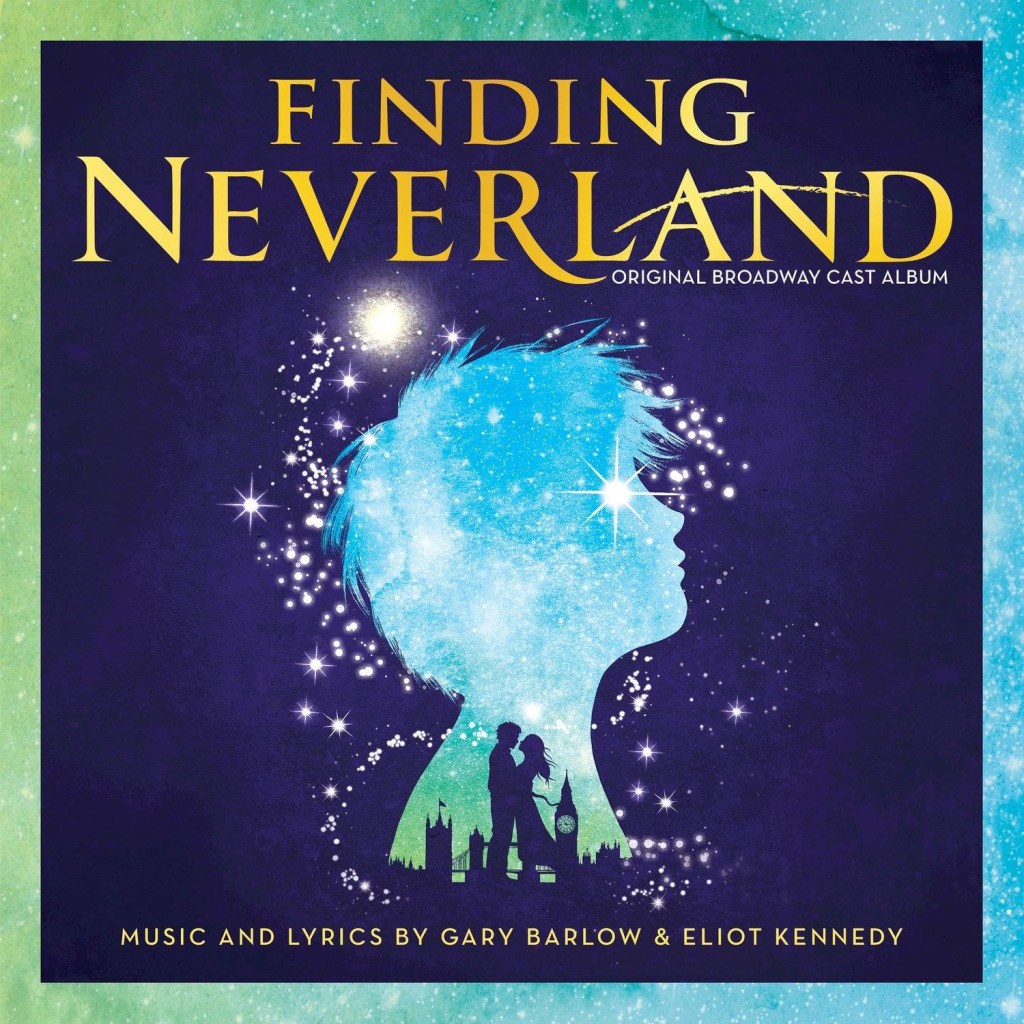
Finding Neverland (2015 Original Broadway Cast Recording)

flac

I am not entirely sure what was happening in my life in 2015 to have this production fly completely off my radar, but indeed it did. I will admit that I am not a huge Peter Pan fan. I suppose the story of not wanting to grow up doesn’t align with my childhood in any way. In fact, I was eager and ambitious to grow up and be an adult as soon as possible, to a fault I presume.

But Peter Pan is an enduring, classic story, and in this version we follow the author on an adventure of imagination. Based on the 2004 film of the same name, Finding Neverland is one of few Broadway musicals whose workshop version has a completely different composer than the final product. I understand that a few remnants of Scott Frankel’s original 2012 score remain intact, but the music is now mainly attributed to Barlow and Kennedy.

After taking a brief glance at the 2015 compilation album “Finding Neverland the Album,” I was certainly impressed, or rather, star struck by the number and variety of artists who contributed to it, so I decided to give the OBCR a try after hearing Ellie Goulding sing what is now my favorite song from the second act of the show, titled When Your Feet Don’t Touch the Ground.

The album begins with a few catchy enough songs, each song is bouncy, adventure themed, poppy, and somewhat forgettable. But what all this is leading to is two (2!) back-to-back Laura Michelle Kelly solos. The first, a power ballad, the second, a lullaby. Then the score starts to unfold and make a little more sense by the time the title track “Neverland” is heard. Matthew Morrison has me sold on finishing the album. The songs in the second half of the album are really exciting. Composers Barlow & Kennedy’ really capture the feeling of soaring, seeking adventure, under-the-stars, twinkle-fairytale-ness.

After Neverland, we are met with a ridiculous track Circus of your Mind. This is the first stand out track where both Kelsey Grammar and Carolee Carmello are featured. It’s a pleasure to hear Frasier Grammar on this recording as I’ve been a big fan of his since I was a small child. As well he is in very, very few cast recordings. And then Carmello, who I know most from the original run of Parade, is always a powerhouse to have.

The rest of the album is super great, and there are too many little moments of delight for me to write down. One is when Morrison is singing Stronger and Grammar is in the background having this fit of yelling that adds a call and response to the melody. It’s really cute and sound great. Here is Morrison and Grammar performing Stronger at the Tonys:

Another moment of delight would be the bit in World is Upside Down where they are trying to clarify the semantics of the word “lost.”

Is he lost in a emotional purgatory? Or lost in an existential search for himself?

(…No he’s just lost.
)

Good heavens! Where, when, and how?

(Do you have experience being lost?
)

We’re experiencing it now!

Leading us up to the end of the show, Morrison sings When Your Feet Don’t Touch the Ground, which is, as mentioned above, the 11oclock number in this show. It really pulls me in, as a listener, and propels me into the finale. The finale is lovely enough, and the bonus version of the song Play is a delightful!

I will admit the actors, who are just so, so, so, so strong, really carry some of the less memorable musical numbers. Grammar, Morrison, LM Kelly, and Carmello really show how much good acting adds to the overall listening experience. The four of them definitely sell the album for me.



Future Demons (2020 Studio Cast Recording)

320 mp3

It’s been a while since I’ve done a good “first listen” to a recording and jotted down my thoughts, and I thought today would be a nice day to do so. So here goes:

Ryan Scott Oliver’s Future Demons is an accidental find, and what a great find! I had obtained this album earlier this year, but this tiny album got lost in the shuffle of my life. I stumbled upon the track My Life With RH Macy earlier today and ended up listening to it a few times on repeat. That is typically a sign that I will give a new album a good listen. A minute into the track, I’m hooked into the chorus being belted by a woman channeling Sutton Foster in all the best ways, and I have to stop what I’m doing and listen to this song. It’s like Rob Cantor, Tori Amos, and Jeanine Tesori got together and decided to write an intoxicating opening number for a Broadway show. Oliver is clearly comfortable with odd-tempos and the art of combining musicality with syllable/syntax structure.

Oliver utilizes an interesting lineup of orchestrations. His opening number goes HAM with sounds from timpani, harpsicord(?), angelic choral backup singers, men chanting and channeling Monster from Frozen, and no shortage of extra beats. It’s really great. It’s an exciting listen. I am left wanting more.

Regarding the timing of the release, 2020 was obviously a strange, and uncomfortable year for musical theatre. And we started to see new and out of the box methods for showcasing musicals. I enjoy some of these recent smaller Cast Recording “EPs,” if you will, as a preview of what the future of American theatre will be.

The songs James Harris and Story We Used to Tell are not as memorable as the opening number, but good enough to keep my interest. Which is so great because the track What a Thought is a total trip.

In What a Thought, we are pulled into a pulsing 3/4 time driving electric guitar synth riff. A seemingly normal conversation between a couple is the backdrop of this maniacal and psychopathic song. We hear the inner thoughts of a man contemplating murder. And step by step, going though hypotheticals, overanalyzing each nuisance and trying to convince and dissuade himself simultaneously from commuting such a crime. The piano-supported normal-sounding dialogue is interspliced with horrifying string passages. Like the horror film Psycho type of horrifying strings. Ree Ree Ree Ree Like someone is being stabbed repeatedly. But with a violin. Anyway, the last track is decent and wraps things ups musically, but I don’t have much to say about it.

All in all, these 5 tracks sound fresh, smart, and promising. As Broadway sleeps, and we all wait patiently in our homes listening to cast albums, and the world falls apart around us, we are left to imagine what the future will look like. For me, this tiny recording is a snapshot of just that, and a reminder that there are good things to come.

I Am Anne Frank (1996 Studio Cast Recording)

160kbps mp3

“June 20th, 1942. Dear Kitty, I am thirteen years old” begins Andrea Marcovicci in this recording of Michael A Cohen’s I Am Anne Frank. This 1996 recording is presented as a song cycle based on Cohen’s original 1965 off-Broadway stage production entitled Yours, Anne. The motif heard with this first phrase, “Dear Kitty…” begins a spiral of words and song that takes one through the last days of Anne Frank’s life, based on her diary accounts.

The Holocaust, with a a death toll that is too high, too incalculable, and too emotionally devastating to comprehend, presents a difficult subject matter to paint with a musical brush. Cohen, via Marcovicci, presents a minimalist piano/vocal/strings/woodwinds arrangement with melodies that provoke contemplation and reflection. Volleying back and forth between major, minor, and dissonant phrases, Cohen captures the complex tone of the diary through a cycle of orchestral, melodic, and spoken moments. He maintains a loose song structure, which allows lyricist Enid Futterman to create an accurate, and poetic, transcription of Anne’s account.

This recording is rich in suspended moments of musical instances that evoke a strong emotional response. A good example is the descending, slow last moments of the first song, when the melody shifts into a descending phrase, and Anne laments that she can “never, ever, go. out. side.” Another example is in the title track, when the song builds and builds and suddenly ceases, followed by Marcovicci singing solo “I’m afraid of the dark, I’m alone in the dark” before the melody resumes. In many ways, the musical account is both haunting and riveting. Marcovicci’s consistent, rich vocal tone delivers the alternating songs and monologues in a beautiful and appropriate manner.

Highlights of the recording are the opening and final numbers, as well the songs First Chanukah Night, and I Am Anne Frank. The latter of which is a devastating piece of music. This entire 1996 recording is taken at a slower and darker tempo/tone than its original 1985 incarnation. It is absolutely one of my favorite recordings, and one of the best song cycles I’ve ever heard.

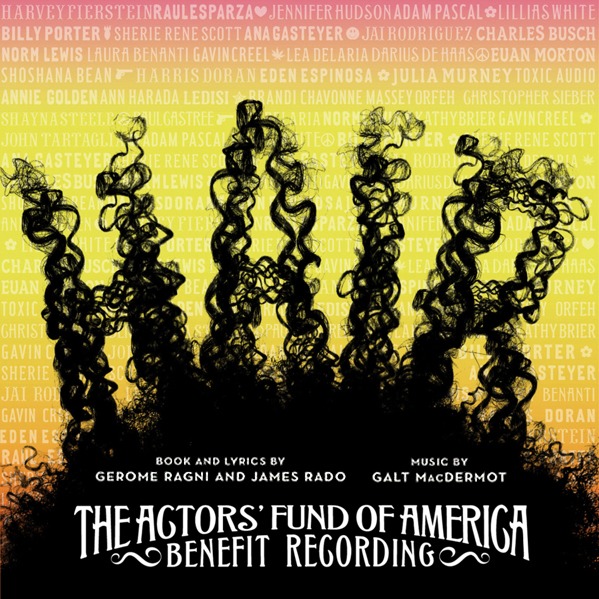
Hair (2004 Actors’ Fund Of America Concert Recording)

24bit flac

There are just too many recordings of Galt MacDermot’s Hair to find a proper “definitive” cast recording. And I’ll admit, in the early 2000s, I was a very impressionable boy. Some of the cast I idolize(d), including, but not limited to: Euan Morton, Adam Pascal, Gavin Creel, Raúl Esparza, Sherie Rene Scott, Harvey Fierstein, and on and on. These are singers I grew up listening to constantly: Rent, Taboo, Hairspray, etc., so for me, this is somewhat of a “dream cast” recording. But again, I admit bias.

Lillias White and Lea DeLaria start off the concert with fantastic performances of Aquarius and Donna, respectively. The concert has a few ensemble numbers, per the score, but rather than having specific character roles, the show is presented as a revue with many, many well-known actors featured on each song.

Standout numbers are I’m Black / I Got No right into an outrageous and completely fantastic version of Air. Harvey Fierstein will leave you literally breathless. It’s one of my personal favorites from this album. Fierstein adds his own dimension of humor and quality to this classic song.

My future husband The wonderful Raúl Esparza delivers us the title track Hair, with passion and charisma. My enjoyment of this song is typically impacted on the backup vocals during the chorus (“hair. hair. hair!hair!hair!”), which can be hit or miss on some recordings. It’s a hit on this one, I’ll tell you. Esparza, with ease and grace, shows off his insane belting range by the time the bridge has come around. He gives us just enough rasp on the lower notes for the rock feel, and then he adds his tremendous belting capabilities for that good ol’ broadway feel.

Other highlights are Orfeh in Black Boys, and Norm Lewis in Let the Sunshine In. But, really, every song is a knockout on this recording. The production presents no lack of talent, and I feel that it serves as a, not definitive, but rather staple recording of Hair for this generation. This album deserves to be on your literal, or digital, shelf.

Jeanine Tesori Megapost

After a couple months absence, I am back, comfortable, and at my desk working on my projects. It feels good to be back! In my online absence, I had some time to do some serious cast album listening. I found myself always going back for shows by Tesori, and I dove deep into her catalog. I’ve decided to highlight a number from most major productions and try to paint a picture of how Tesori’s music penetrates into your heart and mind. And because her music is fairly wide reaching in genre, I am limiting the highlights here to Broadway productions only.

Tesori’s catalog goes back to the late 90s, with her first off-Broadway show Violet, which will later go on to be produced on Broadway in 2014. Her first major Broadway show was 2002’s Thoroughly Modern Millie, a show that will ultimately be the beginning of a longtime working relationship with all-star Sutten Foster. Millie shows us Tesori’s strength in creating music to set a very specific scene. Her music easily transports us back to the 1920s and does nothing but enrich the environment created on stage.

Millie was premiered during a pivotal time in Broadway history. Overall sales and attendance were dropping near the turn of the century, and one could argue that there was a bit of a dip in quality shows around the turn of the millenium. The 2000 Tony Award nominees for Best Musical were: James Joyce’s The Dead, A LaChiusa musical, Contact, and Swing, the latter two being jukebox/dance musicals. So, I don’t know, you decide. Anyway, it’s worth noting that Millie won the best musical tony award 2002.

It is my view that Tesori was a integral part a revitalization, of sorts, of Broadway in 2001/2002. Tesori’s entrance onto the Broadway scene happened shortly after 9/11, when the New York theatre economy was impacted, and the millennia beckoned for change. This rise in quality is supported by by Brooks’ The Producers, Andersson/Ulvaeus’ Mamma Mia, Shaiman’s Hairspray, among others.

Tesori’s next show Caroline, or Change premiered in 2004, to positive reviews. Musically, the show is less episodical, where each scene reveals a new smash hit song, like Millie, but rather a montage of songs, vignettes almost, that tell a much different story than Millie. While Caroline was nominated for Best Musical at the Tonys, the show was up against Lopez’ Avenue Q (winner) and Schwartz’ Wicked. A tough competition.

Tesori’s songwriting is on point during the entire score, highlighted by the second act belting showstopper “Lot’s Wife.” The sustained note after “Slammed on the Iron! Slammed on the Iron! Flat, flat, flat!” that leads into a hair raising major lift and tempo change is just spectacular. By this early moment in time, 2004, Tesori had proved herself an adaptable, creative, and original composer. Another highlight for me in Caroline is the “Moon Trio” bit.

Speaking of a diverse repotoire, after the successes of her first two broadway shows, Tesori reunites with Sutton Foster in the musical version of Shrek. Shrek was never my favorite film, but as source material, I thought it had some potential on stage. The 2009 musical gave new life to a story that was already turning into a meme by that point. I’m glad that the movie got the full Broadway treatment, as well a Proshot, locking it into Broadway history. Tesori’s score compliments Lindsay-Abaire’s humor in terms of tone and timing. The stand out number for me is Princess Fiona’s introduction trio “I Know It’s Today.”

Moving forward into 2014/2015, Tesori provides the score to Violet & Fun Home, the latter will go on to win the 2015 Tony for Best Musical, and in the former, she reunites, again, with Sutten Foster.

Violet takes us on a journey through North Carolina to Oklahoma in a young woman’s pilgrimage to be healed from facial disfigurement. Musically, Violet’s score channels Jason Robert Brown’s Parade in style. An American South folk acoustic score with guitars, fiddles, short vignette-like musical segments, elements of Sothern gospel, soul, and church organ, praise Jesus style.

The show’s stand out number is Act 1’s On My Way, capturing the adventure and prospect of hope and healing. An optimistic look toward the future. A refreshing musical number that gives me a feeling of fresh start, hope, and good faith.

Tesori’s most recent Broadway score is Fun Home, which won the Tony in 2015. A coming of age story, Fun Home is a more intimate score, both in subject matter and the minimalist qualities of the music. Passages that invoke thought, questions, and queries. The musical journey is intertwined closely with the book, a pas de duex of melody and story, making the musical score and the libretto/book feel as one unit, like the music is a part of the storyline itself. This is a quality of Tesori’s music that I find hard to describe, but easy to fall in love with.

Since 2015, Tesori has been involved with a number of projects that include Operas and off-Broadway shows. But I will wrap it up here, shortly.

In Fun Home, as a stand out number, and maybe one of her most well known songs, Ring of Keys is tune that most of us can relate to. Being young and seeing familiarity in a stranger. A familiarity that you can’t quite place. Something that feels like home, but you don’t really know what home means yet. Ring of Keys captures the wonder, anxiety, and emotional complexity of learning who you will grow up to be.

All of Tesori’s Broadway albums belong on the shelves of theatre enthusiasts everywhere. If you haven’t had the chance to listen to one yet, check the link at the top!

xoxo AB

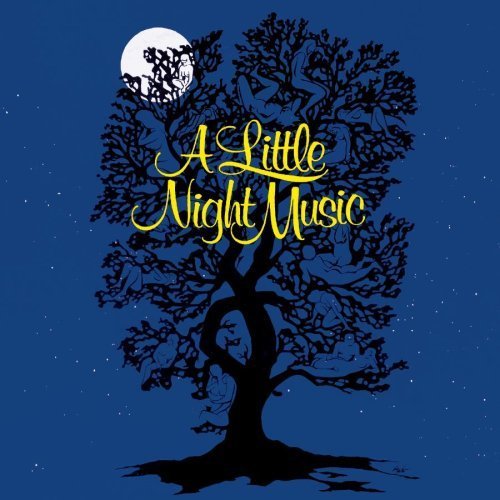
A Little Night Music (1973 Original Broadway Cast Recording)

By 1973, Sondheim had already made a name for himself as master composer/lyricist, and with his two prior shows Follies and Company, he had set the bar incredibly high for himself. Needless to say, he has a magical quality of exceeding expectations.


The recording begins with a bizarre overture in which lead singers bellow operetta-esque phrases of non-sense, all in 3/4 time. In fact, with very few exceptions, Sondheim does not deviate from the time signature, although he adds variations to the theme often. Due to his creativity, and sense of musicality I suppose, the show doesn’t feel “stuck” in 3/4, and definitely has a natural ebb and flow to it. The opening solo, a personal favorite of mine, Now, begins shortly after with a quick duplet(?) phrase introducing a line only Sondheim could write:

“Now, as the sweet imbecilities tumble so lavishly onto her lap”

We are quickly thrown into the inner thoughts sung by the man, which the female character responds, though not directly, in speech. The impeccable timing of both characters is stunning, and if you close your eyes and pretend to be the composer of the song, you will likely get lost within the first 10 seconds. The juxtaposition of the manic ramblings of the man, against the almost blasé, underwhelmed tempo of the woman, makes this song an auditory treat.

Sondheim would not just leave us with Now, though. After Now comes the song Later, a slow ballad sung by a troubled young man, Henrik, in anguish at how it’s “intolerable being tolerated,” and how easy it is to feel ignored. He forcefully delivers a descending line near the end, the climax, exclaiming:

“How can I wait around for later? I’ll be ninety on my deathbed and the late, or, rather, later, Henrik Egerman.”

After the less traditional melody of Later, we are graced with the female solo Soon. Of the three melodies, Now, Later, and Soon, Soon appears the most stable and structured out of the three, and this is important because near the end of Soon, Sondheim asks all three actors to join together in a trio in which Now, Later, and Soon are all sung simultaneously, with the slower melodic proceedings of Soon acting as the glue holding everything together.

The trio of the three dissimilar melodies highlights Sondheim’s ability to craft a structured group number using the building blocks of three distinctly unique melodies, tangled together in a interwoven web of emotional disfunction, counterpoint melodies, and, of course, a triplet time signature.

The entire track is, needless to say, really well executed, and, for me, breathtaking.

Another gem on this album is the alternate take version of Glamourous Life, added as a bonus track on the album.


Most certainly a quirky and wonderful tune. I feel that it is woven together by piano/orchestral triplets and a sweeping melody. The song sounds like it would fit into modern musical theatre quite well, at least more so than some of the other tracks.

And finally, I can’t talk about A Little Night Music without mentioning Glynis Johns, with whom I was introduced to as a child via Mary Poppins. Johns delivers a stunning performance of Send in the Clowns. There has never been, and will never be, another Glynis Johns. Her voice will always bring me joy, nostalgia, and, sometimes, tears.

Wir: Familie ist, was Man Draus Macht (2020 Original Hamburg Cast Recording)

Happy New Year! I welcome 2021 with open arms, and I look forward to discovering so many albums that have been released under extreme conditions of 2020.

I happened across this album by certain accident but as well by happy surprise. Wir, a musical by Lukas Nimscheck, tells the story of two gay couples and their adventures in child adoption. I will admit, that is the extent of my plot knowledge, as my understanding of German is terrible non-existant.

From the opening number Heute ist dieser Tag (Today is the Day), we enter an electropop 1980s “99 Luftballons” keyboard rift fever-dream of sorts. The feeling of floating through a modern, fast paced, driving, melodic story has just begun. The opening number features some relevant dialog that I’m sure is important, but I’m too busy listening to the beats and the autotuned church bells playing Here Comes the Bride. For anyone who enjoys albums with total electronic auditory immersion, put on some nice headphones and turn up the volume. Take a nice walk through the city and let this album serve to add order to an otherwise disorderly world.

With the absence of most theatre in the year 2020, many of us have sought refuge in the comfort of cast recordings and proshots. This cast recording gives us some great musical storytelling along the same vein as 2016’s American Psycho, driven by electro beats, backup vocals, synthesizer magic, etc.

In a way, this recording falls into a very narrow genre sub-category, with few albums falling into the same sub-type, musically. And we’ve seen many recordings as such in 2020: Amelie 2020 London, Emojiland 2020 Off-Broadway, Black Friday 2020 Starkid, Ratatouille 2020 TikTok, among others.

2020 has forced almost every industry to immediately adapt and change it’s production strategy, with musical theater being no different if not worse off, with a full year of darkness. I assume history will look back at this moment in time as a pivotal moment in musical theatre, with the future of the story being unknown to me. But I am looking forward to seeing what it looks like. Wir: Familie ist, was Man Draus Macht makes me feel and hear a glimpse of what’s to come. Productions like this are actively writing the history of musical theater.

This album has served a very welcome surprise at the beginning of 2021. With the backdrop of political and cultural turmoil in my country, an international pandemic at its worst, and no reopening of Broadway in near sight, at least I have albums like this to serve a distraction and get me excited for the future.

Available:
https://amzn.to/2XrHip5

On Spotify:


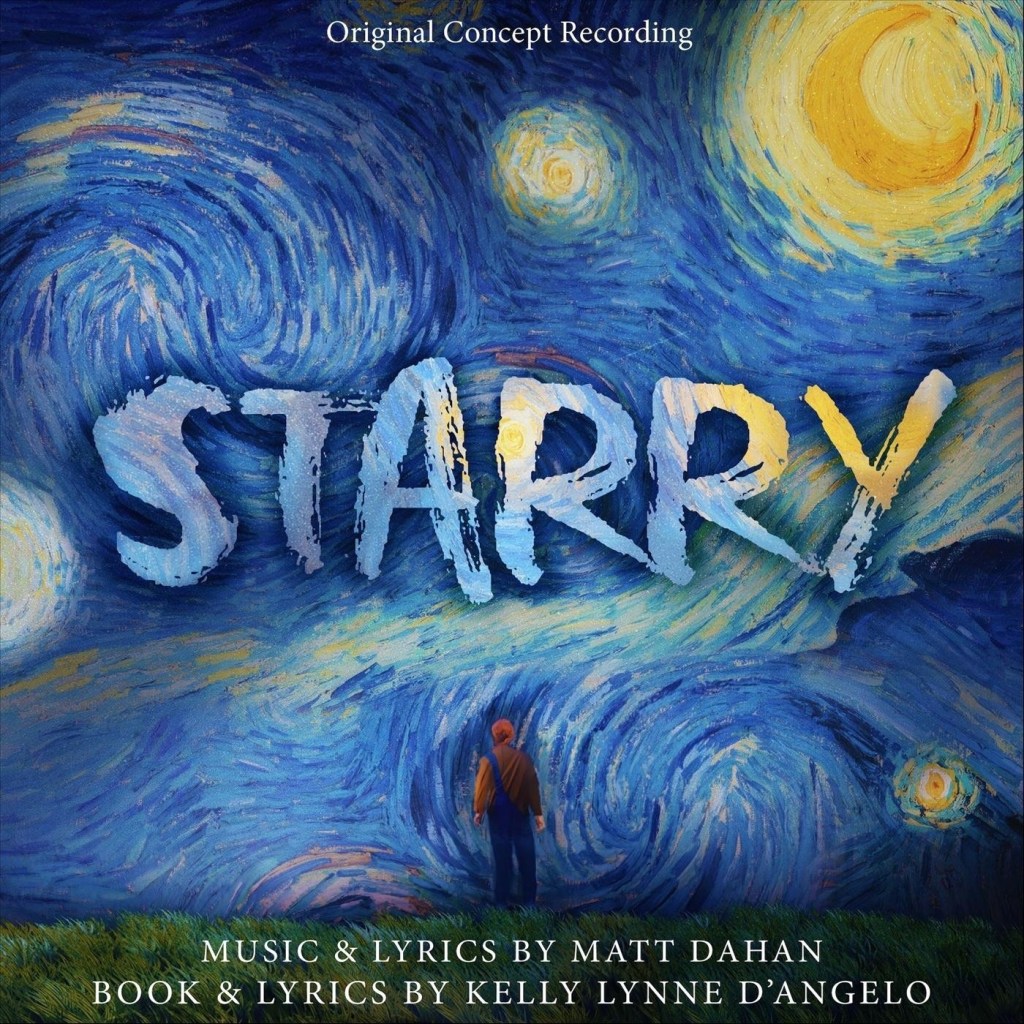
Starry (2019 Original Concept Recording)


The album begins by inviting the listener to “try to catch our eye, show something that we haven’t seen.” A somewhat meta and daring opening line for a concept album by young composer Matt Dahan. Dahan’s rise comes from the LA based theater group StarKid Productions, mostly famous for parody/meme musicals. This albums deviates from StarKid’s formula and introduces some original and enticing melodies surrounding the story of Theo and Vincent van Gogh and their “journey together to find the power of expression.”

After a Dahan takes us into flight with A New Horizon. Continuing with the piano driven pop/rock melodies, A New Horizon speaks of hopefulness and creative agency. By now, just by listening to a couple tracks from the album, I assume Dahan was, in a good way, inspired by the likes of Pasek and Paul, Larson, Schwartz, and Miranda…

Not all songs are strict duets/solos or ensemble numbers. Dahan and lyricist D’Angelo occasionally takes a conversational approach to the verses, much like Rent’s melodic phrasing during sung dialogue. The Sower incorporate various melodies and phrases overlapping themselves through a series of somewhat unexpected chords. Much like Jekyll and Hyde’s Your Work Nothing More or Rent’s Christmas Bells, you can listen to this song over and over again and hear something new each time. It’s wonderful and the last line “and everyone knows you reap what you sow” comes across more emotionally poignant than cliché. This track is my personal favorite from this concept album.

The album allows the listener plenty of time for emotional introspection. Dahan and D’Angelo’s score speaks wildly in favor of creating our own present, and supporting creative freedoms. Amidst the backdrop of the Covid-19 pandemic, and a cultural war in the USA, we are faced with universal uncertainty and fear. The power of creative expression is of upmost importance right now, and we owe it to ourselves to give the gift of creative expression and storytelling to generations to come.

But of course, as most theatres are currently dark, most production of new shows is currently halted. But I definitely have hope that Starry will be picked up by producers and treated to, at very least, an Pre-Broadway trial run.


The show ends tragically and tells us:
“The answer’s in the sky,
“the sight of the starry night makes me free”


Candide (2004 Avery Fisher Hall Concert Cast Recording)

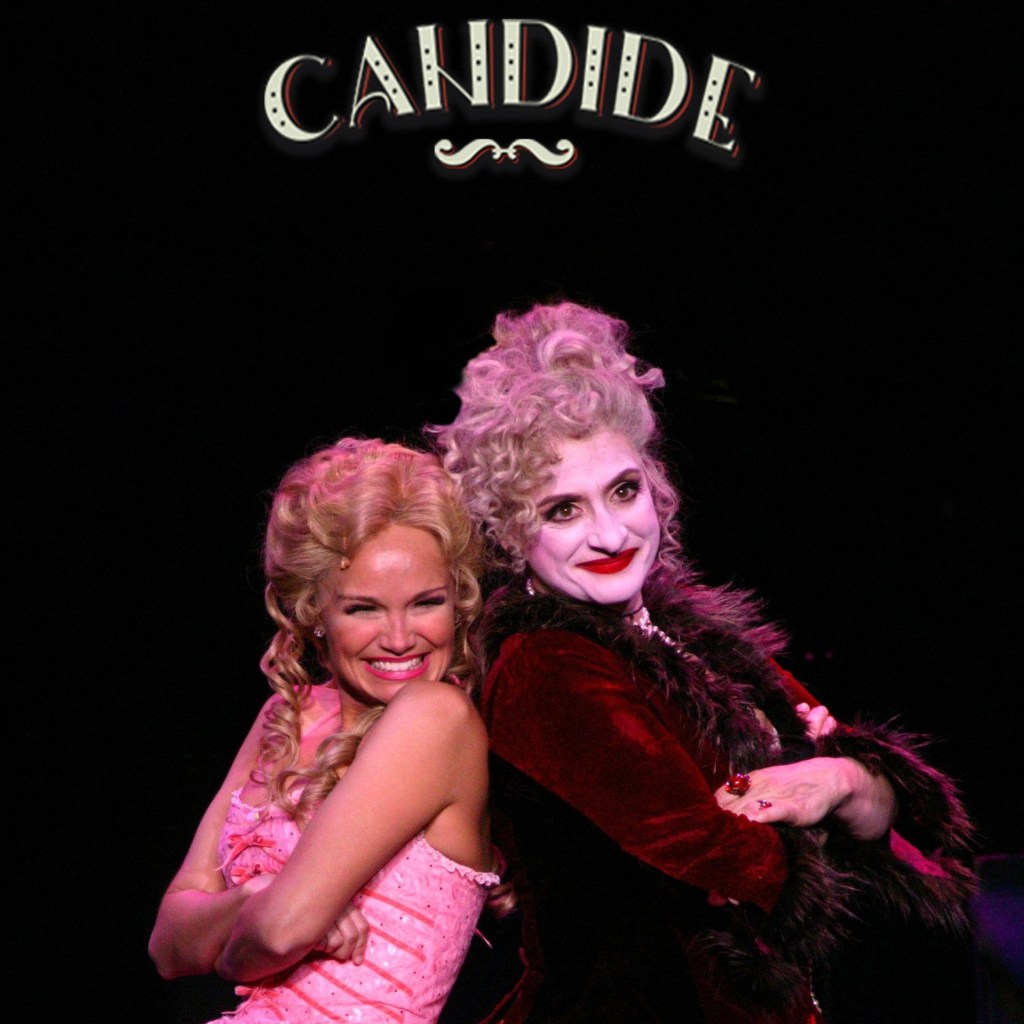
Having premiered one year prior to West Side Story, Candide remains somewhat overshadowed when one looks at Bernstein’s repertoire. This charming Operetta, however, should not be overlooked. Originally critiqued as being rough around the edges back in 1956, Candide evolved over the years and had a major rework back in 1974, which included a new book/libretto. Candide since has become a staple modern operetta for opera companies and musical theaters around the world. The 2004 Avery Fisher Hall concert tells the classic story in a way that is inviting to the wide range of modern audiences.

Kristen Chenoweth is cast as Cunegonde freshly off her hugely successful performance as Glinda in Wicked in 2003. Opera singer Paul Groves is cast as Candide. And the legendary Patti LuPone plays the role of The Old Woman. In 2004 Chenoweth was mostly famous for her high-pitched musical theatre voice and minor television roles. Her background education in opera is showcased as Cunegonde in this festive production. Her first proper duet with Candide is Oh Happy We, where she fantasizes a long happy life with him. This song is a good example of the rolling, melodious phrases that remain a centerpiece of this operetta.

Later on in the first act, we are met with perhaps the most famous piece from this operetta, and a personal favorite of mine, “Glitter and be Gay.” The pure vocal power it takes to execute this aria oftentimes overpowers and deafens the actual humor of the scene. Kristen has no problem with the humor, naturally, while maintaining a strong operatic presence. Kristen breaks the ice in the first line of the song, and she has the crowd rolling in laughter,

“Glitter and be gay, that’s the part I play.
Here I am in Paris, Fraaaaaaaaance…”

Near the end of the aria, after going into fit of madness from her life of luxury, she belts out an impressive sustained high Eb (above high C), which, for me was surprising, as I was not familiar with Chenoweth’s background in Opera. To get the full experience, please see the video I linked at the bottom of the post.

Speaking of humor and divas, Act 2’s We Are Women is a sassy duet between LuPone and Chenoweth. It was a later addition (1989) to the operetta’s score and is sure to deliver a few good laughs. This duet shows off Candide’s “Timelessness,” or rather, its ability to stay current and modern in the hands of a good director. This production is definitely the most Musical Theater version I’ve heard, and despite LuPone and Chenoweth not having an operatic resume, the concert functions quite well as a Musical/Operetta hybrid.

The finale Make Our Garden Grow is the ultimate cherry on top of an absolutely delicious musical. “Garden” is a masterpiece level song and helps solidify Bernstein as one of America’s finest composers. With a simple and heartfelt melody, its hard to not get chills when the choir comes in acapella near the end:

“We’ll build our house and chop our wood,
And make our garden grow”

In summation, in a successful attempt to broaden its audience, Lonny Price’s Candide brings in Musical Theater heavy hitters Chenoweth and LuPone, as well as Opera veterans like Paul Groves, to create a lively, modern, and well adapted presentation. It’s very delightful to see the show withstand the test of time over the years, and despite some of the deviations from more traditional Opera, the cast and musicians are able to capture the beauty, humor, and charm of this Bernstein classic.

And, because once is not enough, here’s Kristen Chenoweth singing Glitter and Be Gay. It’s worth pointing out the athleticism involved with singing this Bernstein aria wearing heels while simultaneously dancing, sitting, laying down, jumping up and down, and using a giant pearl necklace as a lasso, for 7 minutes straight:

Så som i himmelen (2018 Original Stockholm Cast Recording)

Based on the 2004 Swedish Film As It Is In Heaven, this is pop composer Fredrik Kempe’s beautiful freshman musical. Released in 2018, this Stockholm production has added to Sweden’s selection of fine, fine musical work over the decades. This album has been on my regular rotation for a few months now, and I find there to be something pure and, for lack of a better word, heavenly about Kempe’s score.

The album is rich in soaring, choral backdropped, major keyed ballads. The opening number, Den tid jag har, is a simple preview of the soaring melodies we are yet to experience. The song Gabriella’s Song was, with great reason, taken from the original Film’s soundtrack. I always appreciate a nod to the original piece of work (please see: the use of Yann Tiersen’s music in the 2019 Amelie Munich Production), and this song fits right into the score without the slightest off-set. The line “Jag vill känna att jag lever,” or “I want to feel alive,” and specifically the word “känna,” with a consonant/vowel cluster I physically cannot pronounce, gives me frisson every time I hear it.

In the song Stjärnorna (“Stars”), we are literally taken to the sky, and Kempe’s flying melody and beauty of Malena Ernman’s voice holds our hands as we ascend the musical staircase to heaven. As the melody holds steady, we are lifted into another realm entirely when the key changes and Ernman hits notes that I did not know were possible to hit with such force. This song is thrilling to me, and I love the details in the piano, staccato melody, background singers, and tone of the singer, all to artistically dot the sky with stars. This song, for me, is the melodic climax of the entire Score.

This Swedish work is an obvious celebration of life and music. Kempe’s loyalty to the original spirit of the film is impressive and honorable. Gabriella’s Song, and Så som i himmelen itself, gains a home among the Swedish likes of Chess and Kristina från Duvemåla, forever a favorable representation of Swedish Art and Music.

For reference, here is the wonderful Helen Sjöholm singing Gabriella’s Song from the original film: