Love Never Dies (2018 Revised Australian Cast Recording)

Since 2010, watching the roller coaster evolution of Andrew Lloyd Webber’s awkwardly conceived sequel to Phantom of the Opera has been… interesting. Book and Libretto aside, I think Love Never Dies is the best show one of the best shows, musically, that he’s written since 1993’s Aspects of Love. This album is a revised version of the 2011 Original Australian Cast, which was released only on DVD. This revised version includes various studio recordings that reflect changes made to the show over the last decade. The release year 2018 coincides with the first US national tour and the revisions in the recording are reflected in the US tour. To clarify the album year, most of the vocals were recorded in 2011 (identical to the Australian DVD) but 2018 more accurately reflects the present version of the score.

One of my favorite revisions is the 7/8 phrases added to Beauty Underneath. The melody alteration is haunting and very well-placed. You can compare the two versions below:

2018 version
2012 version

With all the changes made to the original London show, no one seems to be able to make logical sense of the Love Never Dies project. Other Webber musicals from the last quarter century, like Woman in White, Beautiful Game, Whistle Down the Wind, etc., have not been critically acclaimed, but Webber never put as much energy into revising them. There’s something about the Phantom franchise that Webber is absolutely obsessed with getting the audience on board with it. I will applaud Webber’s persistence. However, I don’t think any of the Love Never Dies productions were successful in linking the original plot of Phantom of the Opera, with the convoluted, sometimes boring, story of Love Never Dies. Raoul is a disgraced abusive husband with an absurd amount of gambling debt? Phantom got Christine pregnant? All of this unfolding with a circus-y, early 1900s Coney-Island freak-show backdrop? What?!

With regard to storyline, the entire show unfolds like a bizarre fever dream. But Webber has maintained his lush, orchestral, romantic melodies and there are some very beautiful moments in the show. The peacock feather explosion on the backdrop of the title track is one of my favorites. Seen here:

The song Love Never Dies has one of the best melodies in the show. When I saw the US tour with Meghan Picerno, this scene made me feel like I got my money’s worth. The scene is quite spectacular to see on stage. It’s possible… that I cried.

So long as I can suspend my belief and understanding of the original story, and accept this musical as a separate dimension, I can find many musical gems here and there throughout the show.

Even though Webber’s composition skills changed over time, it’s hard not to be impressed with his catalog of works. Andrew Lloyd Webber will always have a happy home in my heart. His more recent shows can be critiqued, but it’s a treat to have such a acclaimed and prolific musical composer with a career that spans over 50 years. Part of the joy of listening to ALW shows is hearing how his music has changed over time.

I will sign off on this post with another favorite of mine from the album. The quartet version of Devil Takes the Hindmost.

Oliver (2009 London Revival Cast Recording)

Before I begin my rant about Lionel Bart’s disturbingly beloved and oozingly british musical, I have to preface with a small complaint: The album cover. Ay yai yai. The tagline is “The Fabulous New [sic] OLIVEr! Cast Recording” with the word Live protruding in red from the text like the alien out of Sigourney Weaver’s stomach. It’s awkward to read and look at. The entire production logo is the 1994 London Production copy and pasted onto a cloudy, dark view of St Paul’s Cathedral. The spires of the cathedral are completely darkened against the sky, and with the upward straight on angle of the shot, and the it kind of just looks like the US capitol strange. Headlining puts Rowan Atkinson, Jodie Prenger (who?), and the 2009 London Cast, but not the kid playing the lead role, in oddly different font sizes, and it is obvious that someone spent less than 10 minutes making this.

Sorry about the rant, it was just really bugging me. As for the actual production, Rowan Atkinson is a cool choice for Fagin, and the role of Nancy is a winner of a UK reality show, okay, and the role of Oliver is rotated by three boys, with one, Laurence Jeffcoate, being recorded here.

I’ll start by saying that I don’t feel that this show, in general, has aged very well. Compared to other heavy hitters from 60 years ago, Sound of Music, West Side Story, Bye Bye Birdie, among others, Oliver has become more and more estranged from the modern human experience as the years have passed by. While the stories in Sound of Music, West Side Story are certainly set in a certain time, the stories of love and perseverance feel timeless in modern productions.

The story of a young orphan boy adopted by an crazy old man named Fagin who raises an platoon of orphaned boy pick pocketers seems… farfetched. Dickens’ original iteration of the story is now almost 200 years old, and makes more sense as social commentary considering London in the early 19th century. Nowadays, and on stage, Fagin’s creepy old man vibes are hard to avoid in this adaptation.

Overall it’s not a terrible recording. I think I prefer older recordings like the 61/62 Broadway/London recordings, or the motion picture soundtrack from 1968. But every once in a while I am in the mood for some Atkinson and listen to Reviewing the Situation.

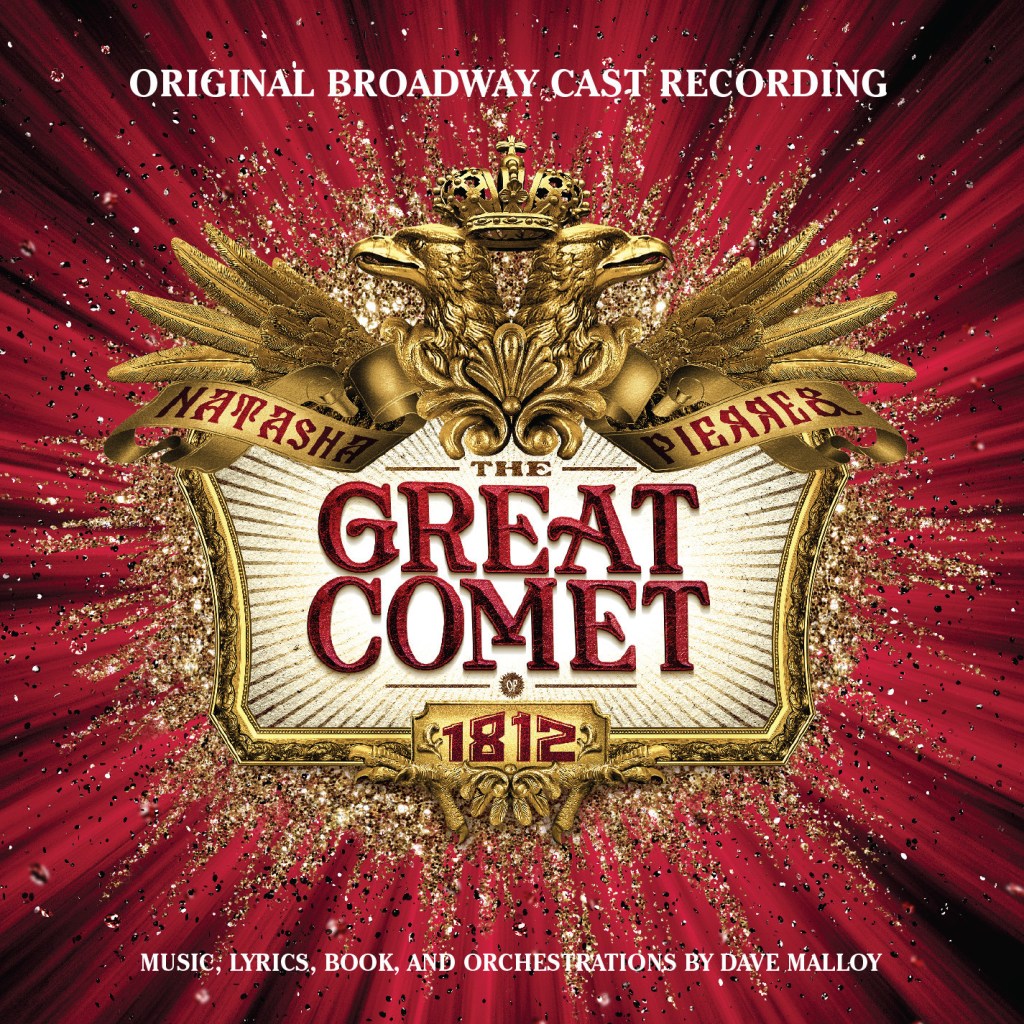
Natasha, Pierre & the Great Comet of 1812 (2017 Original Broadway Cast Recording)

vbr mp3

And the award for the most ridiculous title of a musical ever: Natasha, Pierre & the Great Comet of 1812. The source material is Tolstoy’s War & Peace, and I actually thoroughly enjoy the name of the musical. But, oofta, it’s a mouthful 14 syllable title, however it is most definitely intriguing. Back in 2017 I wanted information, immediately, about this show solely based on this title.

By 2017, Dave Malloy, the composer/lyricist/writer of Natasha & Pierre, already had multiple off-Broadway musicals, including the original off-Broadway version of Natasha, on his resume. Malloy is a young composer who has decades ahead of him to create more, and I definitely look forward to what he has in store for us in post-covid Broadway.

Natasha has been described as an electropop opera by Malloy himself, but I feel that the acoustic and folk elements are not captured well enough in such a genre. It’s moot, but no matter what genre one prescribes, the score is unique and remarkably fresh. Malloy uses Russian folk music, classical, theatre, EDM, and pop to deliver a cast album that defies any traditional description.

Dissonance is prevalent in the score. At least, the dissonant moments are memorable to me, oftentimes in an uncomfortable way. Before listening to the entire score, by the middle of Act 1, I used to be put off by some musical moments, including the “Opera” scene. It wasn’t until more recently that I pushed through and gave the album a proper listen. I reached what is my personal favorite song Dust and Ashes, and I realized I should have listened to this album sooner. Malloy’s score is so interesting and well-constructed. Some emotional moments in the show have music that is so hair-raisingly perfect, and there is a really cool juxtaposition with the modern & classical elements.

The stage design, lighting, and choreography are top notch. The entire show is done in the round with dozens of audience members at tables that are directly on the stage. There is a bit of actor-musician approach to the orchestrations, as some characters play their own instruments accompaniment.

Natasha did not fare as well as projected at the 2017 Tony’s. Nominated for a whopping 12 awards, Natasha only picked up 2. It was beat out in most categories by Dear Evan Hansen and Come From Away, the latter of which was snubbed of Best Musical in my humble opinion.

Highlights include: the Prologue and Dust and Ashes. Worth pointing out the incredible Stage design if you watch the Prologue cut.

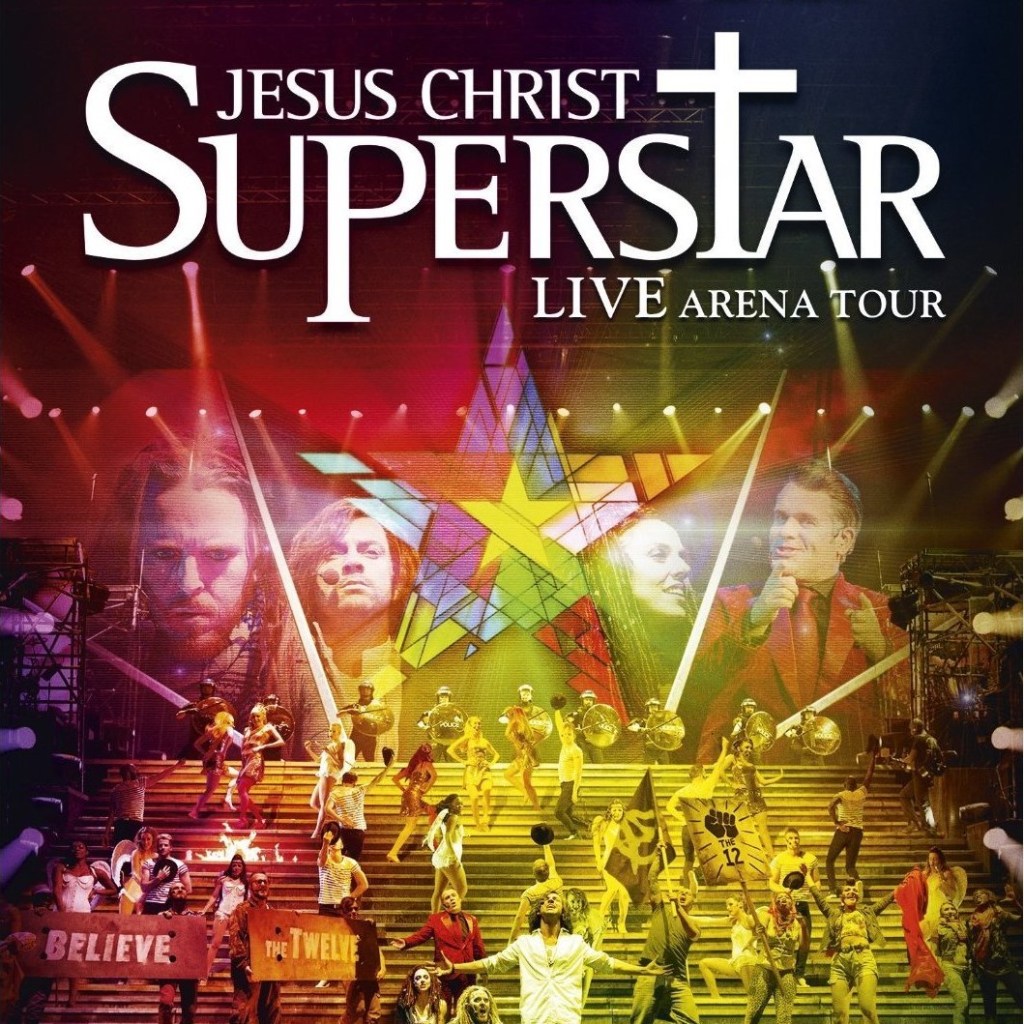
Jesus Christ Superstar (2012 UK Arena Tour Cast)

320 mp3

A 2012 UK Tour Cast Recording was never released. Rightly so, but we’ll discuss that later. As such, I feel it’s a bit unfair for me to write about it. But! The production was released on DVD and written into the history books. The audio rip of this show is in my collection and from time to time, if I’m in the mood to laugh, I listen to a few tracks. This album has an it’s-so-bad-it’s-good quality to it. The orchestrations aren’t terrible, but the vocals are just such a let down for a production with such promotion, hype, and big-name headliners.

Lowlights Highlights Notable tracks include the opening Heaven on their Minds. The guitar intro starts and for a few seconds, this sounds like a pretty normal production of the Andrew Lloyd Webber rock opera with high production value. Tim Minchin sings the first verse with nothing unusual happening. But the second verse begins, and he is autotuned more and more as the track goes on. It ends with him exploding into a supernova of autotuned yell/belt/scream/singing. Atrocious. But do I love it? I’m not sure.

In What’s the Buzz, Melanie Chisholm, of Spice Girls fame, runs out of breath during her first verse. In the same verse, she stumbles over the rhythm/pitch and is autotuned accordingly. The duet with Minchin that leads into Strange Thing Mystifying is pretty awkward. Minchen holds the rhythm together and tries to coax Chisholm to hit the right beats, but to no avail.

Everything’s Alright lacks all emotional and complexities that were ever intended to exist in this song. This song is a Webber classic sung by one of the most iconic women in history (Mary Magdalene, not Chisholm) and is butchered by a singer who sounds like she is chain smoking between verses, gasping for air. Minchin jumps in with his verses and tries to overcompensate by growling some of his lines. But just a terrible recording of this song.

Simon Zealotes is not terrible. I’d have to rewatch it to see for certain, but it sounds like everyone is doing high intensity NSYNC POP dance moves for the entire track. Maybe the mics are too close to the mouth and everyone’s breaths are highlighted? Ben Forster’s rendition of Poor Jerusalem is not terrible, either. Forster attained the role by winning a UK talent search TV show.

And then, The Temple. What kind of crazy human would destroy the score to such a hauntingly beautiful song with such abominable instrumentation. The driving, pulsing, techno inspired beats that hit on every downbeat are maddening. It’s almost as if Forster decides to forget how to sing for both of his verses.

The Temple is about as far as I am capable of listening to this recording from front to back. Skipping around a bit I gather that there’s not much to look forward to to keep this ship afloat. King Herod’s song isn’t terrible, but doesn’t manage to make this production any more memorable.

I actually enjoy the orchestrations and choral parts of Act 2’s Could We Start Again Please, but the Spice Girl fails to redeem herself in this one. The only track I didn’t loathe was This Jesus Must Die. The cast director found men with a wide arrange of vocal ranges/talents to cover all the appropriate bases of this villainous song.

Overall, a terrible recording. Only long standing JCS fans and avid collectors should bother obtaining this. There are dozens (and dozens) of recordings of JCS I would recommended before this one.

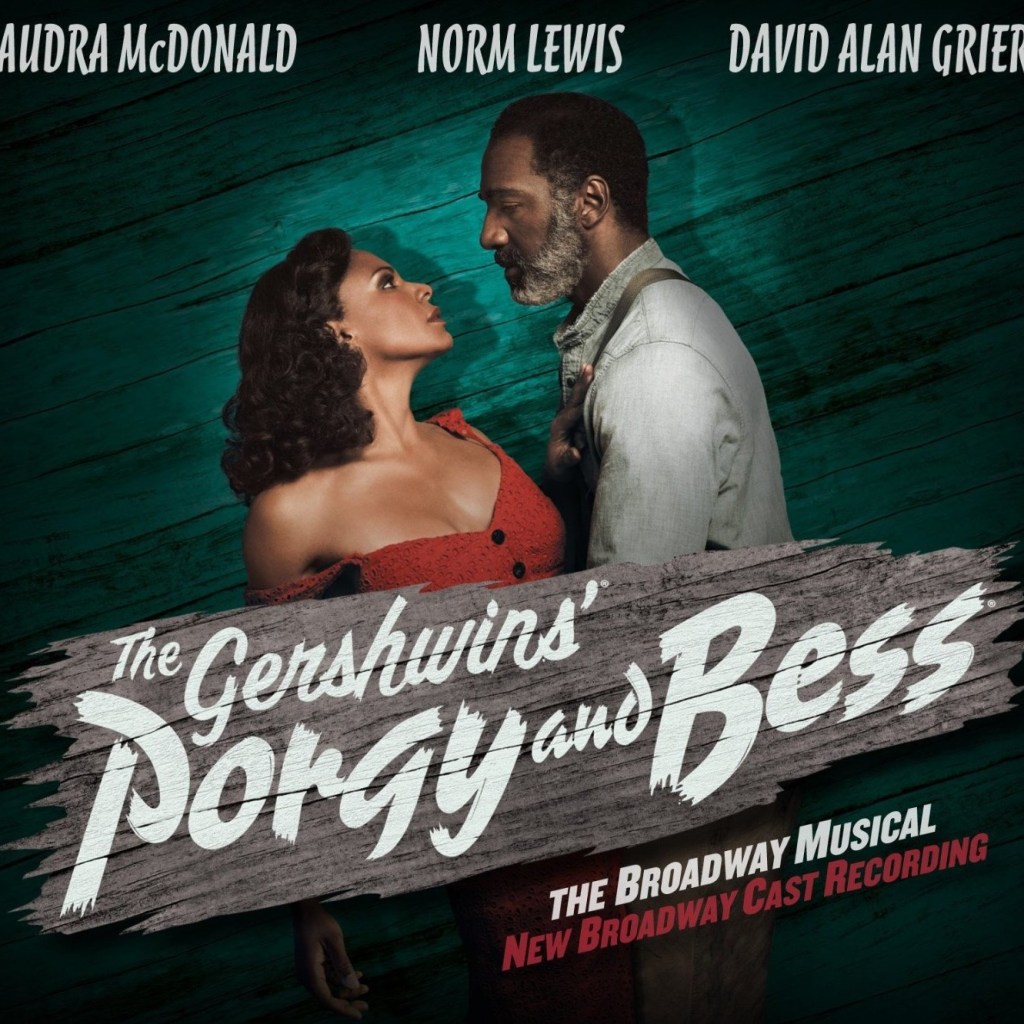
Porgy & Bess (2012 Broadway Revival Cast Recording)

192 mp3

The 2011–12 Broadway season had so many gems, and was a mild relief to see such a diverse array of musicals following a couple years of slightly bland musical production. In this 2011-12 season, we were blessed with the successful Evita, Follies, Newsies, and Once. But also (still blessed) with the less successful Bonnie and Clyde, Ghost, and, the worlds worst titled musical and Not-Since-Carrie level flop, Spider-Man: Turn Off The Dark. Turn off the dark? What? Anyway, the amazing Audra McDonald and Norm Lewis bring fresh beautiful and modern life to the Gershwin opera Porgy and Bess. In the same 2011-12 season the Gershwin’s music was featured in another production, a revue titled Nice Work if You Can Get It.

Broadway productions of operas can present certain challenges, especially when trying to reach the low attention spanned tourists that frequent Broadway every year. We’ve seen successful productions of Puccini’s La Boheme, Bernstein’s Candide and West Side Story, among others, but for the most part, Broadway and Opera don’t always mix well with respect to business.

The new orchestrations and removal of recitations from Gershwin’s Porgy and Bess create a new musical landscape that respectfully reconceives the original Gershwin score into a Broadway score with dramatic underscores during dialogue, and boisterous, soulful, and lively renditions of the opera’s most famous numbers.

Stand Out tracks include Roll Them Bones/Summertime Reprise, Woman is a Sometime Thing, It Takes a Long Pull to Get There, the haunting Oh Doctor Jesus, I Got Plenty of Nothing, and the Act 1 and Act 2 Finales Oh I Can’t Sit Down and I’m On My Way, respectfully.

Audra McDonald’s performance is standout across the entire album, with Norm Lewis easily keeping up with the level of talent she brings.

Overall, I’d say they did a fantastic job turning the opera into a Broadway production. The casting was, obviously, spot on. This is one of my favorite recordings interpretations of this Gershwin classic. Here’s a great medley from the 2012 Tony Awards:

American Psycho (2014 Original London Cast Recording)

Feeling tired? Low energy? Bored? You might need the 2014 West End Recording of Duncan Sheik’s American Psycho. It begins with:

“It took me 19 years, but I finally developed a good relationship… with my body!”

Suddenly a high, shrill, terrifying shriek. Next comes the synthesizer with a high energy intro. You begin to hear overlapping advertisements from the 1980s. The piano and beat enter the mix and Matt Smith Patrick Bateman starts telling you about his morning shower routine. Only took 30 seconds into the first track to cause my heartrate to rise, and honestly, from then on the entire album carries you through a 1980s electro drug induced party party party haze. And. It’s. Awesome.

Duncan Sheik’s American Psycho was short lived when it premiered in London in 2014, lasting only a few months. And it was even shorter lived less successful with the 2016 Broadway transfer. Poor, poor American Psycho only lasted for 6 weeks on Broadway. I will admit, it’s a strange listen, and perhaps the visuals of the stage production, which are amazing, are needed to fully understand what Sheik was trying to accomplish, musically. To me, that is often a sign that I won’t be impressed by the score. An example of this is Dear Evan Hansen. Great music but the songs could be used for a musical about literally anything. In fact, one might argue that the music doesn’t even quite match the emotional complexity of the story.

But I digress. After his successful freshman Broadway hit musical Spring Awakening, he had raised the bar incredibly high for any future musicals. And it’s obvious that Sheik wanted to try something that wasn’t going to be Spring Awakening 2.0. And, as such, we have American Psycho.

Unlike some Cast Albums, it’s hard for me to point out highlights, as the album feels more like one long song. One of my favorite moments occurs in the first act when the ladies are preparing the party. To highlight the blocking/choreography/lighting, check out the dance break around the 1:45 min mark. First time I saw it my jaw dropped. Worth watching from the beginning for the full experience. Great song.

Overall a great album that often gets overlooked for reasons discussed above. I’m glad it at least got a stellar cast recording, even though the productions were less successful. I would, in all honesty, like Duncan Sheik to take another look at the score in a few years, and maybe give us a American Psycho revised 2.0. I think the score has a decent amount of potential to be even better than it already is. I’ll be looking to see what Sheik works on after Covid lockdown.

Moana (2016 Māori Film Soundtrack)

vbr mp3

Yesterday, I descended into a deep listening pit of Lin Manuel Miranda music, mostly earlier stuff from In The Heights and Freestyle Love Supreme. I was recently delighted to find the Maori dub OST of Moana and I wanted to give you 3 quick reasons to add this to your Cast Album collection.

Reason #1: Recordings in Polynesian languages are few and far between. The original English soundtrack feature songs with lyrics in the Polynesian languages Samoan, Tokelauan, and Tuvalu. Disney’s production value is high, and it’s wonderful to hear the Polynesian language family being represented, especially with a score by Miranda.

Reason #2: Track 5 Ki Uta E, or We Know The Way, is totally awesome. I have, unsurprisingly, listened to most of the dozens of non-English dubbed Moana soundtracks. In the Maori dub of We Know The Way, the lower harmony in the second verse is, for some reason, mixed slightly, but noticeably, different and turned way up. This makes the vocal part in this particular verse sound more like a duet than the original Miranda version. It’s a really beautiful moment and the singer, Rob Ruha, does a great job doing Miranda’s role justice.


Reason #3: Track 10 Ko Au A Moana… I am Moana will give you chills. Singer Jaedyn Randell nails this third (out of four total) reprise of the the How Far I’ll Go bit. Even if you have no idea what’s happening in this song, you definitely know that the protagonist has come to an important realization of some sort.

Lin-Manuel Miranda might be at his prime right now, and it’s very exciting to see what the future holds for him, and in turn, for us.

The Book of Mormon (2011 Original Broadway Cast Recording)

Robert Lopez, as well his wife Kristen Anderson-Lopez, are strong power players in the musical composer arena. Robert’s early success with Avenue Q lead to his ability to turn music to gold (let it go) with collaboration with his wife. While only moderately prolific with Broadway musicals, both R Lopez and K Anderson-Lopez are very young and I anticipate them being big hitters when Broadway returns from the grave. I will spare you the time, and energy, and not go into detail as to why Let It Go is literally the best song ever written, and it’s no surprise to me that R Lopez has as EGOT x2.

But I digress. Book of Mormon is right up against the border of my tolerance of obscenities. I’m not a huge Parker/Stone fan, and never really “got into” South Park. Their signature crudeness for the sake of being crude elicits a wide spectrum of reactions from the audience. Despite its lyrics, it is so funny, that, for me, the humor completely overshadows the foulness.

I would argue that Lopez’s score helped did carry boost the show to its current standing as a Broadway hit, and softened some of the harsh elements of racism and religion bashing. At the end of the day, I love the show, and I always end up going back to the OBCR and giving it a good listen.

The Church of the Latter Day Saints took the parody of it’s sacred text in stride and took the punches as gracefully as possible. As offensive as it is, its level of parody assures the audience that it is not a direct attack on the Mormon community.

Highlights of the album are the opening numbers Hello, Two by Two, and You and Me, as well as Baptize Me, and the amazing Act One finale Man Up, the latter being my personal favorite. If BOM is not in your collection yet, check the link above.

Der Graf von Monte Christo (2009 Swiss Cast Recording)

Frank Wildhorn is a topic of conversation I tend to avoid among theatre enthusiasts. People love him or hate him, it seems. Critics point out his lyricist choices, and this might be one reason why I love non-english versions of his shows. What are they saying during the Prolog? No idea! But it sounds great! I have to be in a certain mood to listen to Wildhorn, and, as you’ll read in a moment, have very mixed feelings about him as a composer.

Count of Monte Cristo is an obvious choice for Wildhorn, the composer known for turning lush literature classics into colorful, outrageous, and lavish scores. Does this show have Wildhorn’s signature power ballad duets with beautiful harmonies (but Linda Eder should actually be singing everything)? Yes! It does. But I can eat up Wildhorn’s melodies like candy, full disclosure. He is my Broadway bubble gum.

Ein Leben Lang, the opening power ballad, sounds like it was cut from Jekyll and Hyde, but it’s a lovely enough melody for me to give it a pass. The musical spaces between the inevitable power ballads are what I find most interesting about this album. Wildhorn steps, ever so slightly, out of his music(al) box, and delivers something more varied. And again, it’s in German so the lyrics are wonderful (I don’t speak German).

I will admit that I typically don’t listen to a Wildhorn song here and Wildhorn song there. When my musical urges point toward Wildhorn, I usually opt to listen to the entire show, rather than highlights, or skipping around. His songs do sometimes get lost within themselves, but I do think the overall musical narrative is consistent with Wildhorn’s brand, and I don’t think that it’s a bad thing.

The track Könige starts with a simple standard power ballad melody, but builds into, what turns into, the climax of the score. I assume it’s the Act 1 Finale. It starts and continues as a solo number, and a second man enters the musical dialouge by the end of the second verse. As the song builds, with no vocal harmonies thusfar, there is a key change near the end that initiates a beautiful moment between the two men singing. They break from their solo verses, and begin a call and response version of the chorus, each man harmonizing with the others’ response, until the song resolves and you are left with chills down your spine. Side note: this German Swiss recording of this particular song blows all the other versions of this song out of the water.

I am aware of the criticism that Wildhorn receives, but I do find his music interesting enough to listen through an entire album, multiple times. I mean from Jekyll & Hyde to Dracula to Civil War, these melodies of his get stuck in my head quite a bit, and I don’t mind listening through an entire Wildhorn album when I get the power ballad itch.

If you haven’t heard Wildhorn’s version of Count, check the link above.

xoxo AB

Dancer in the Dark (2000 Music from the Motion Picture)

Confusingly known in the Bjork oeuvre, and it’s actual technical title, as SelmaSongs: Music from the Motion Picture Dancer in the Dark, this a small album known for her duet with Radiohead’s Tom Yorke entitled “I’ve Seen It All.” A small album, yes, but a powerful, heart breaking, and gut wrenching album. The story of the film is bizarre, ultimately tragic, and, arguably, melodramatic in the most literal sense. It’s been a long time since I’ve seen the film, but it takes you inside the mind and life of an eccentric mother who is sentenced to death, and ultimately must make sacrifices to save the livelihood of her son.

Musically, the score weaves together an organic, orchestral sound with a nervous, almost twitching, musical arrangement. Her signature “microbeats” ala her albums Homogenic, Vespertine & Medulla are present. This album is on the skirts of being defined as a cast album. In fact, I don’t categorize it as such. It’s more a solo album that includes many of the songs from the film. Mostly Bjork solos, there is one duet with Tom Yorke, I’ve Seen It All, which was nominated for an Oscar, and subsequently robbed of by Bob Dylan. It paints this sweeping emotional musical landscape that leaves you with chills, out of breath, and in love with Bjork and/or Yorke.

SelmaSongs is a strong Bjork solo album in it’s own right, but it is a recording of a movie musical, so I keep it in my collection of musicals. The highlights of the album are every song, because there are only 6, equally beautiful, equally painful.

Bjork’s music has always had a theatrical element to it, so a musical soundtrack, for me, feels right up her alley. SelmaSongs is a beautiful, albeit small, album that I think deserves attention if you are a fan of movie musicals.

Movie version does not feature Tom Yorke, and has a different arrangement