Les Filles Du Roi (2019 Vancouver Studio Cast)


Not to be overlooked, this is a Trilingual gem out of Vancouver, BC from the young composer Corey Payette. As it was released near the end of 2019, this album has lifted me up on many occasions over the last year. It has quickly become one of my favorites in my collection, and whenever I want to meditate or take pause, I will often listen to a few tracks from this album.

The song Cold Isn’t Permanent is an anthem of the tenacity of the human spirit. Against the harshest of winters, spring will come. In our current political and social climate, this is a message I need to remind myself of every once in a while. A duet between a man and a woman, each person sings solo for the first few minutes, and then come together harmoniously for the last chorus. The ensemble joins in for the finale outro chants, and the song ends with a chilling piano riff.

As kids, we spent our summers not far from Vancouver on the San Juan islands. Before the internet and cell phones, these islands were completely isolating and pristine. Something about it gave me great peace of mind and a feeling of unlimited freedom. The natural beauty of the Pacific Northwest is painted with Payette’s score. In addition to my love for the Northwest, my education background is in Linguistics, so the Trilingual aspect of Payette’s libretto intrigued me quite a bit. This use of multiple languages speaks volumes to the universality of Music. The conjuring of emotions from text that might not be directly understood by the listening (ie, me).

With lyrics in English, French, and Kanien’kéha (Mohawk), and a lush string-heavy score, Payette makes the beauty of the Canadian landscape come alive before my eyes ears. The score is diverse throughout the album, with only a couple reprises here or there, but mostly a broad spectrum of original songs, motifs, and themes

I highly recommend this album.

Riverdance (2000 Original Broadway Cast Recording)

First off: Bill Whelan is a genius. As a fan of the original 1995 production, I remember purchasing this album in 2000 with the hope of hearing a fresh new recording of one of my favorite shows, and boy oh boy was I in for a surprise. I really appreciate the creative changes they made, and the Lion King fanboy that was me in 1999 was ever so excited to hear Tsidii Le Loke in her second (and ultimately last…) major broadway appearance. The African Irish Lion King Riverdance Mashup really intrigued me. At present, this music brings me such wonderful nostalgia.

Bill Whelan is known for his technically intricate melodies and diving into unknown tempo/time dimensions. Highlighting this is the title track Riverdance, which I believe is the end of Act 1. The song beckons us in with an Irish siren, heeding us to listen. The singers presumably give the dancers a quick break before the Act 1 Finale Dance Spectacular that is about to happy. Listen below:

Riverdance from Riverdance 2000 Original Broadway Cast Recording

The alternations of tempos and time signatures is quite detailed and, for me, it’s very fun to try to keep up with the downbeats. This song is classic Bill Whelan.

In Act 2 they invited Tsidii Le Loka, of Lion King fame, to write and perform music. It added a much different style to the second half of Riverdance, but it kept with the theme of togetherness and connecting to the global community through dance and music, etc.. Loka’s solo, Amanzi, brings a personal touch to the Riverdance score with her unique songwriting style. Her music is so refreshing and I wish there was more media available of her music. Listen below:

Amanzi from Riverdance 2000 Original Broadway Cast Recording)

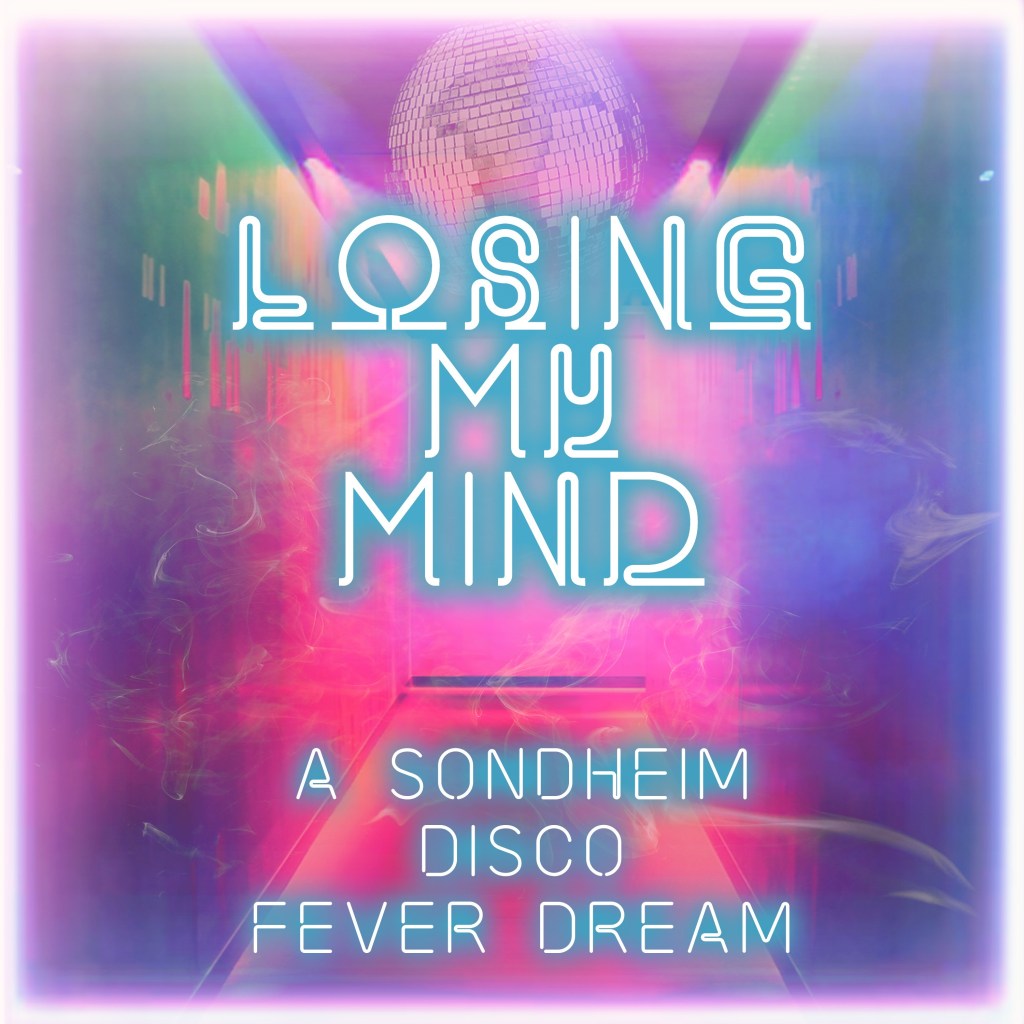
Losing My Mind (2020) ‘A Sondheim Disco Fever Dream’


As the reality of a global pandemic began to settle in, uncomfortably so, in March/April 2020, something amazing happened. Losing My Mind: A Sondheim Disco Fever Dream happened. Seeing my favorite industry go dark so suddenly and for such an indeterminate amount of time really kicked me in the nuts. But this album gave me hope that artists will bounce back, and that magic can still be made with music. Much like many things that happened in 2020, I could not have ever predicted that this album come to fruition. A disco mashup/remix album based on Sondheim’s music? Impossible! But not actually….

The end result really showcases not only Sondheim’s talent in songwriting but very much so his talent of writing words. City On Fire / Hot Up Here exemplifies this to me:

The chorus shouts “City on fire! Rats in the grass!” And so begins one of the more terrifying moments of Sweeney Todd. This section of the libretto is, perhaps, my favorite lyrics Sondheim has written. How does it the sound when mashed-up with Hot in Here from Sunday in the Park with George? Deliciously so.

City on fire! Rats in the grass!
And the lunatics yelling in the streets
“It’s the end of the world!” Yes!
City on fire! Hunchbacks dancing!
Stirrings in the ground
And the whirring of giant wings!
Watch out! Look!
Blotting out the moonlight!
Thick black rain falling on the
City on fire!

This is also an album that speaks to the universally compatible quality of Sondheim’s music. I imagine Sondheim will be relevant for a long time and there will always be ways to re-interpret some of his works. And, despite being literally a disco album, it feels timeless in quality. I know I’ll be able to enjoy this album for years and years to come, and it won’t ever feel dated.

Thank you Joshua Hinck and Scott Wasserman for putting together an album that pays such great tribute to the great American treasure that is Sondheim. His legacy will live on in theatre history forever and this album is proof.

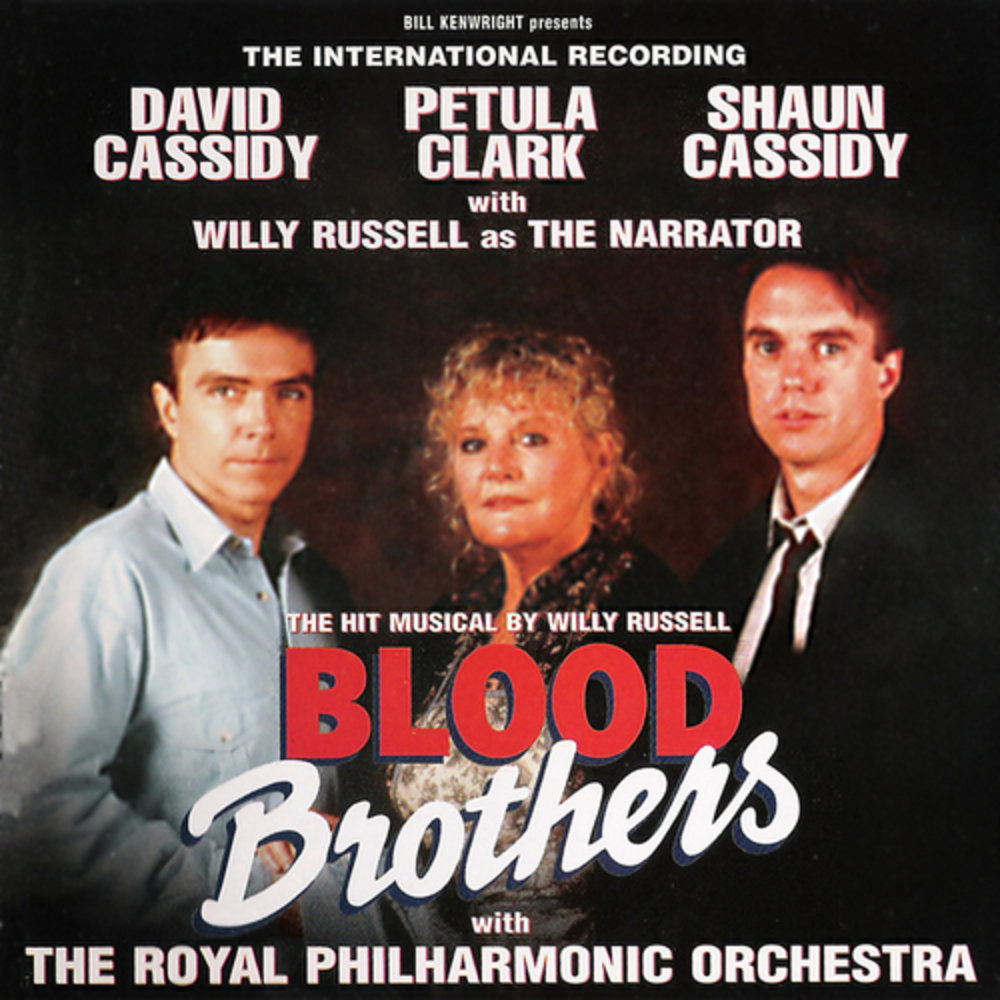
Blood Brothers (1995 “International” Cast Recording)

I am embarrassed to admit that I know very little about Blood Brothers, and I’ve never seen the show live. The score is somewhat foreign to me. I tend to gravitate towards specific composers and explore their work as a whole collection. And Willy Russell has no other works that I am was familiar with. On that note, I don’t have too much to say about the show, other than I’m excited to listen to other recordings and learn more about the show. It’s famous for being one of the longest running productions in history ever, but it doesn’t get a lot of stage time here in the states.

After going through a bit of a Petula Clark binge this month (please refer to my recent post regarding her in Sound of Music), I decided to give Blood Brothers a proper listen, and I was pleasantly surprised. The musical score seems to favor female driven ballads, which surprised me only because of the title of the show, with the male characters holding main roles, but never accented much during “climax” moments in the show.

It’s clear to me that Clark’s performances are the main hook of the album. She starts with Marilyn Monroe & Easy Terms, and then ends Act 1 with Brand New Day, and finishes Act 2 with Tell Me It’s Not True. These big, powerful, female vocal songs provide pinnacle moments in the shows score. And, in my opinion, each song is more beautiful than the next.

Tell Me It’s Not True is great. I can hear it over and over in my head only having heard the song a few times. The tune is so catchy and Petula is superb. She does not rush this finale number, and she allows the song to properly build, with her vocals leading the chorus in lush, rich sadness. This is one song I can listen to on repeat, easy.

Blood Brothers showcases the tragic beauty of devastation and loss. The struggles of a young mother and her ill-fated sons.

Sound of Music, The (1981 London Revival Cast Recording)


It’s hard to analyze Sound of Music without noting Julie Andrews performance in the classic film, so I’ll get the Julie chat out of the way here. Imagine a world where the movie was never made, and the only Maria’s that ever existed were those who played her on stage. Petula Clark would have been Maria 2.0 after Mary Martin’s original Broadway performance in 19XX. 1981 was the beginning of a new era of musical theatre. The decade would soon be defined by Webber, Sondheim, Yeston, Shonburg, and Richard Rodgers was now a full generation past. In the spirit of keeping older shows relevant, I think the 1981 Cast Recording is a fine adaptation of the Rodgers and Hammerstein classic.

The brass fanfare ushers us into the sound of music. Woodwinds chatter amongst the whispering percussion and horns, We are transported to the pristine mountains of Switzerland(?). The helicopter view of Julie Andrews twirling around is embedded in your memory if you were born before 1990. If you never saw the film, just know that it’s amazing. The orchestra builds, and builds, and builds and stops(!) on a single note played on a violin… And Petula Clark’s voice begins:

“My day in the hills has come to an end, I know. [Ding.]”

With this one line, she reaches out and grabs your attention and mesmerizes you for 10 seconds, calming all nerves, and quelling any fears that your expectations won’t be met. Her vocal tone against the horns is so beautiful. She continues to the climax of
“The hills are alive…!” and my heart is full of joy. By the end of the number, she has shown us a full range of dynamics and vocal tone. Clark has a lot of potential for this show, I think. And she gives her own smooth twist on the classic role that I grew up adoring.

Clark’s take on I Have Confidence is unique in that her confidence is not shrouded in nervousness, but rather shrouded in excitement. She begins the song quiet and timid enough, and her nerves come across as eager jitters. For the second half of the show, she’s ecstatic and gives us the Petula Clark belt-and-slur high notes that we can expect. The song ends with an over-the-top Seventy Six Trombones marching band situation, but it’s a good track, and a personal favorite of mine.

As Sound of Music entered the crazy 80s, I believe the music represented Rodgers’ work well, and Petula Clark made the character her own. This is usually my go to album if I’m in the mood for Petula Clark, which is, these days, often.

Kristina från Duvemåla (1996 Swedish Cast Recording)

Buckle your seatbelts, everyone. This is one long, emotional roller-coaster of a musical, giving Schonburg’s Les Mis and Miss Saigon a run for it (sadness) money. I’m talking about Benny Andersson and Björn Ulvaeus’ (of ABBA fame) epic Swedish musical Kristina från Duvemåla. Kristina’s entire score apparently clocks in at around 4 hours, with it’s 1996 Swedish Cast Recording, reviewed here, running just under 3 hours. The melodies are rich, the orchestrations are unique, gorgeous, and soaring. Andersson’s musical about hope, change, life, and death always fills my heart with love and sadness.

It’s been 15 years now since its incarnation, and Kristina has never seen the same level of success as Andersons’ hits Mamma Mia or Chess, but this album is absolutely mandatory for all theatre enthusiasts. And I’ll explain why:

I first heard this musical back in 2001 when I was also introduced to the, not quite as long, Complete Danish Cast Recording of Chess. It was the first time I had heard Chess in its entirety, and I was eager to hear another Andersson/Ulvaeus epic musical. The Swedish duo were spiking in popularity here in the states due to their Broadway transfer of the wildly successful Mamma Mia in the summer of ’01. My friend in London ripped the 1996 recording of Kristina (at 30kbps, yikes) and sent it my way. It remained, low quality, in my collection for 15 years until I recently acquired a decent recording, prompting me to give it a focused, well-deserved full listen-through. I listened to this album around 3 times over the course of the week, often jumping back a few numbers to reevaluate and re-live the songs.

Act 1 highlights for me include the exclamatory song “Nej!” (“No”) and the haunting choral number “Vi öppnar alla grindar” (“We Open Up The Gateways”). Both numbers highlight Andersson’s ability weave powerful solos with layered choral numbers, and beautiful orchestrations, never giving us a dull moment. The track “Blonder pa havet” takes us soaring through the clouds with a string-heavy melody. As soon as you think Act 1 is slowing down, we are hit with a bass-heavy, One-Night-In-Bangkok-y, driving number Löss (“Lice”), with a creepy, skin-crawling, driving tempo of 7/8 time, this song keeps us on our toes and our hairs raised. Helen Sjöholm delivers verbose, Swedish lines with fierceness and incredible speed. The chorus responds with emotion to her cries and by the end, you can almost feel the lice crawling all over your body. Act 1 ends with “Min Anstrakan” (My Apple Tree), an Anthem-esque theme, which is quite beautiful.

Act 2 begins with a proper entr’acte that showcases the scores blend of classical/acoustic and mild-electric sounds, and then dives into a “Merano” style chorus. I’ll be honest, Act 2 doesn’t grab my attention like some of the numbers in Act 1, which doesn’t surprise me as I’ve never seen the show and have not formed an emotional connection to the plot or characters. The music is worth everything though. “Ljusa kvallar om varen” feels like a slower and more mellow version of Chess’ Mountain Duet. It’s clear that Anderrson has a very specific style to his music: beautiful, soaring string-heavy melodies interlaced with driving upbeat tempo pop songs with a driving electro beat, with Kristina’s music usually falling into the former category.

Not having seen the show, I don’t know much of the story, but you can feel the shift from a feeling of hope and excitement in Act 1 into a more tragic Act 2, full of desperation and loss. A quick glance at a plot summary confirms this and… oh my, it’s tragic indeed! Spoiler: after suffering a miscarriage halfway through Act 2, she succumbs to death in her husbands arms. The melodies leading up to the Act 2 finale confirm a feeling of sadness, loss, and hurt. We get a heart-racing argument in “Prariens drotting” into an oddly tempo-ed song Vildgras with a major lift in the melody, and a driving chorus with a full choir. Middle of Act 2 we hear the moving ballad “Gold Can Turn To Sand,” which I believe had some moderate commercial success in Sweden, understandably so. By the song Wild Cat Money, I now fully feel the sensation of impending despair. After a few more slightly depressing melodies, we hear her death in the last number. Not speaking Swedish, I can still feel the pain, suffering, and love in her voice.

In conclusion, although Andersson is not a hugely prolific theatre composer, he has marked the industry with his own, unique style. Any fan of the epic musical tragedy genre should give this one a listen, and if you’re a fan of Chess, you’ll definitely enjoy this one.
Brooklynite (2015 Original Off-Broadway Cast Recording)

Sometimes a placeholder is needed in my collection. A recording, often a soundboard, audience bootleg, DVD audio rip, etc., that is listed amongst luckier shows that garnered official recordings. Examples of this include Carrie Broadway Soundboard, Rent Workshop Bootleg, Cats 1998 West End DVD rip, Lestat and Dracula Soundboards, to name a few. These are albums I want listed in my collection because they mark a landmark, or significant production.

Brooklynite had a brief run off-broadway, and it never received a full cast-album treatment, let alone a Broadway transfer. Luckily, composer Peter Lerman posted a faux-cast album on soundcloud for us to hear what the score sounds like in most of its entirety. The “album” is comprised of studio recordings as well as stage recordings (soundboard? audience?) The album exceeds my expectations of what living in the borough of Brooklyn might “sound” like. It’s cute, funny, melodious, and sweet. Candy for the ears.

Every city has its own character, aspects, and personality. You can hear 1960s Baltimore come to life in Hairspray, 1800s London in Sweeney Todd, and early 2000s Newfoundland in Come From Away. Lerman does a great job at transporting us to the modern hustle and bustle of Brooklyn life. The sounds of the city and the characters we encounter paint a very clear picture of Brooklyn. The picture is not perfect, it’s a very clean score, but the grittier side of the city is captured less, even though the characters speak about their desire to make Brooklyn, and the world, a better place. The lack of grime and dirt is just fine for me. There’s an almost idealistic charm about the album. It sounds sweet and adorable, and it never really loses my interest, nor does it lack depth.

Some of my favorite tracks are the introductory superhero “theme songs.” These short theme songs create a cartoony and videogame vibe to the soundtrack, giving us some insight into the imagination of the protagonists. But the real delicious melodies come out in the middle of the album in the back to back tracks “Key to the City,” “Science of Flight,” and “Little White Lie.” The music is not too complicated, some basic 1-4-5 chord structures, with some major lifts and key changes to keep us engaged. Lerman grabs my attention with the chorus of Science of Flight, and I can hear the city come alive in my head. The jingle of shop doors, the rhythm of people walking, the vastness of the city, it’s all captured in this song. The melody of the chorus picks us up and sends us soaring through the city. Moments like this are the reason I obsess over cast recordings. Sonic moments that transport us out of our own lives. Out of the pandemic. Out of our heads. A brief respite from the incessant nagging of anxiety and depression in our lives.

The show ends with some lovely harmonious and fun duets and ensemble numbers. After a full listen, I’ll usually go back and re-listen to Science of Flight. It’s sad to think I’ll never get to see this show, but I’m grateful that many of the melodies were preserved in this makeshift recording. It’s nice to have a semi-complete placeholder so that Brooklynite can be alive in my collection.

Guess I’ll go pack my things and move to Brooklyn….

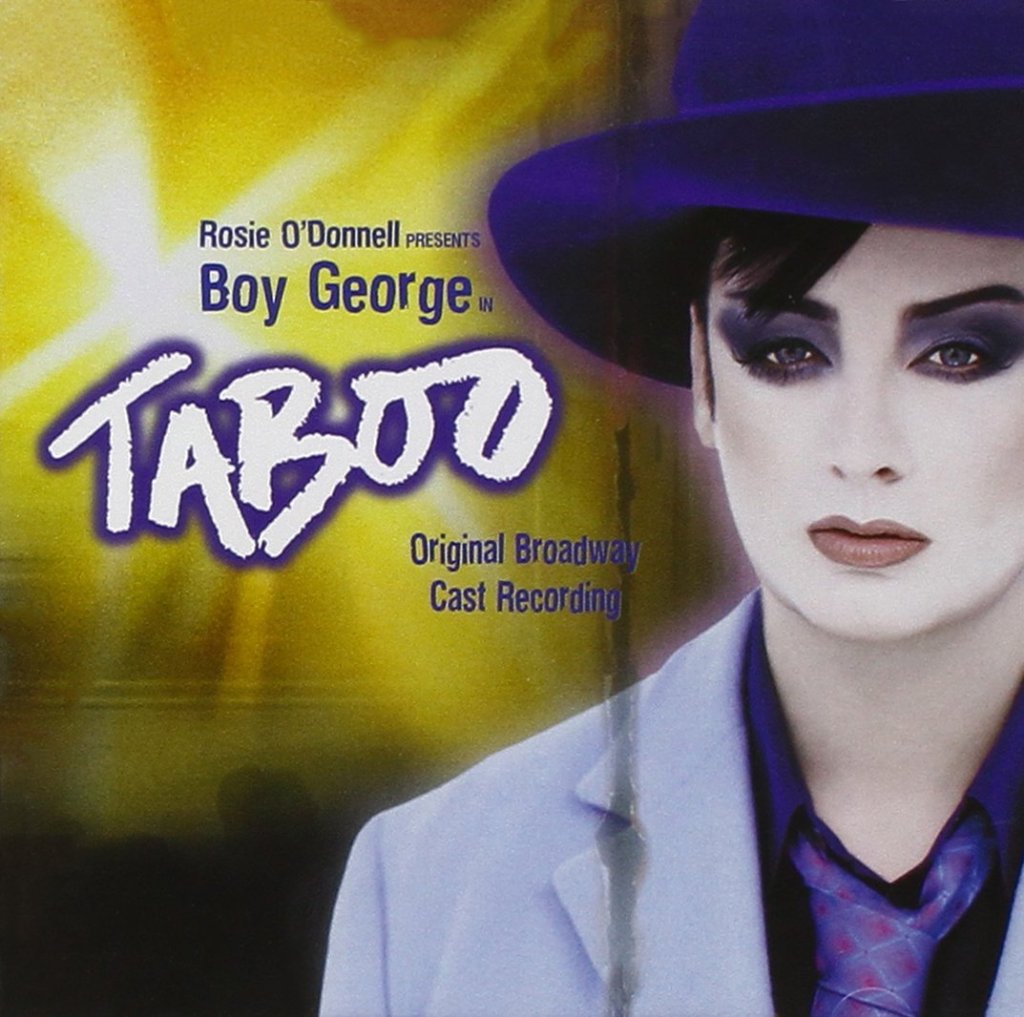
Taboo (2003 Original Broadway Cast Recording)

Boy, oh, Boy George. Why are you so weird and why do I love this album so much? Not sure, but let’s take a look:

In the early 2000s, Rosie O’Donnell, America’s leader in daytime talkshows and Lesbian family values, decides to finance the entire (short lived) Broadway run of the semi-successful West End Boy George biopic play (biopsical?) Taboo. Some of the libretto is, yes, tasteless, filthy, and unneccesarily descriptive, with the Act 1 song titled “I’ll Have You All” seemingly the main source of depravity. There is fairly descriptive insight into Boy George’s moral influences and the dark world of the 1980s London gay sex club scene. I’m not sure if 2003 America really understood what was happening on stage, as I’ve never really considered Boy George a major celebrity or role model in any way on this side of the pond. Additionally, in retrospect, it was slightly a creepy showcase considering his “legal troubles” involving kidnapping, chaining to a wall, and then beating a male escort with a metal chain horrifying acts of violence only a few years later. After this and a string of other not-so-great stories in the mid/late 2000s, I slid my copy of Taboo into a drawer and let it collect dust for many years. I never wanted to associate myself with Boy George when I was young and teenage me felt almost betrayed when I heard about his history of violent behaviour.

Despite the confusing story, weird vibes, and an akward introduction (for many Americans, or rather, at least for me) to Leigh Bowery, I will admit the recreations of costumes, lights, and sounds, are entertaining and dazzling, and make for good theatre. In addition to the dazzle of the exciting gay nightclub scene, we are treated to, not a Boy George jukebox musical, but rather an original score. Yes, we get to hear Karma Chameleon and Do You Really Want to Hurt Me?, but only in short snippits, and George’s music from the 1980s is not the focus of the score.

Act 1 is a whirlwind of druguse, sexual devience, and cross dressing and we are introduced to about 10 different characters, some male, some female, and some inbetween, who all play a role in the story telling. I will admit it is hard to bring myself to fully empathize with George’s story, and I can’t keep track of the characters, but there’s something about this show that draws me in. Act 1 brings us some unforgettable rock opera moments with “Stranger in this World,” “Genocide Peroxide.” and “I’ll have you all”, the latter being, not great, but definitely unforgettable.

With Act 2 they seem to cram in about 6 (actually really good) ballads and there is a storyline of the loss of Bowery to AIDS. I’m not sure what the moral of the story is, nor am I sure I am required to know the moral in order to enjoy the music. Maybe it’s about being yourself and finding your own version of community? Not sure. All I know is that hearing a young Esparza, Morton, lesser known Jeffery Carlson, and longtime broadway Sarah Uriarte is a treat and they really did the best they could with what will always remain very strange source material.

All in all, listen to this show if you want some fun melodies, beautiful ballads, and exceptional vocal talent. Also “Ich Bin Kunst” is a rather fun track.

Death Takes a Holiday (2011 Original Off-Broadway Cast Recording)

I will keep this essay short. Yeston’s scores and librettos are so crisp and clean and beautiful. Honestly I listened to this album 3 times in a row before writing this essay, and I’m mostly lost for words in it’s beauty.

With his pit pit patter of raindrops sounding first few measures of the album leading into this quiet trumpet(?) drawing you into the first vocal line “In the middle of your life.” This is classic Yeston. It’s quite apparent that Yeston writes both the score and libretto. The two blend together in a way that makes each character’s voice feel like another piece in the “Yeston Soaring and Heavenly Melodies” orchestra. This is similar in taste to his Titanic score, and in the best way possible, 14 years later. What a joy!

Like a good book, Yeston’s scores are a great example of a”page turning” style of songwriting, where each track/scene is so musically intruiging that it’s hard not to get excited to hear what comes next. Each song in Death Takes a Holiday transitions seemingly seemlessly smoothly to the next. Even though there are dialog transitions, and obvious silence between scenes, the album still feels like one long beautiful song. This style, if executed well “correctly”, works well with critics and audiences as we saw with Yeston’s Titanic, Sondheim’s Passion, ALW’s Aspects of Love.

Yeston doesn’t strench his lyrics too thin or two broadly. The connections between syllable structure and musicality/time signitures rhythm is really smooth and pleasing to the ears. You know when it feels like the lyricist tries to fit 10 syllables into half a measure? This score/libretto has none of that. There is no bumpiness or clunckiness to the words being said, and the dialog transitions seemlessly into the orchestra as new song begins.

In short, Death Takes a Holiday’s score is nothing short of gorgeous. Listen to it.

Bombay Dreams (2002 Original London Cast Recording)

https://m e g a.nz/file/G0ohFCrJ#mJ9eplflEVpT6E2LOipzlGUvgVeq5NhuW36iGzB2Jn4

As my alarm went off at 4am this morning, I thought, why did I wake up this morning with “Chaiyya Chaiyya” stuck in my head? I’m not sure. I’ve been having a bit of writers block this week and also I’ve been on a strict Maury Yeston binge for the last week, so maybe my brain was looking something different. And different did it find.

I remember buying this CD when I was 14 years old, and I remember being extremely stoked for it’s inception ever since it was annouced. The London production ran for a respectable 2 years (is two years respectable? I suppose it is in 2020). The Broadway production stuggled to find it’s audience (literally) and only ran for 6-7 months. When the US Tour launched and made it’s way to my then home Seattle, a few of my college friends and I bought tickets as soon as we could and went out one night on an unforgettable evening.

In retrospect, Bombay Dreams was a little ahead of it’s time, maybe even being released a little too early to achieve maximum viewage. It was (as far as I know) AR Rahman’s first attempt at a West End musical, and featured an exclusive Indian cast. In the early 2000s, the only access that us white kids had to Bollywood was the random showings of Bollywood Films at a local theater. We had no Indian radio stations, no Spotify, Itunes, etc. It was definitely a genre that pushed (greatfully) the American audience into another world all together.

It’s score is clean, highly produced, electronic in the right places, acoustic in the right places, and captivating. Some songs, however, outshine other songs. All in all, it’s hard for me to stop listening to once I hear the opening Market sequence. Even through Shakalaka Baby, maybe one of the best/worst showtune of all time, I’m left wanting more.

Shakalaka baby shakalaka baby this is how it’s really meant to be |
Shakalaka baby shakalaka baby come and shakalaka with me | […]
No, no, no, no, no, no, no, no, no, no, no, no, no, no, no, no, no, no, no, no, no

What?

The lyrics are bizarre in some moments of the show, and occasionally make me tilt my head and squint my eyes in confusion (sorry Don Black). It’s definitely a show where the focus on the story is somewhat overshadowed by the audio/visual presentation, and while some stuck up theater critics are not fans of this, I think there is a time and place for this. AR Rahman’s 2nd West End attempt, Lord of the Rings, is a famous example of this “problem” that some shows have. But I dare anyone to come to at me and convice me that LOTR is nothing but a fantastic mind blowing musical that deserves an entire chapter in the History of Musical Theater. (Yes, I know it was a flop, but I’m not an investor or businessman, so I’ll continue my enthusiasm.)

I don’t know exactly what the show is about, having not seen it for 15 years, maybe it’s about an actor/actress making it big in Bollywood? Sounds about right. But the music transports me right back to the stage with the bright pink/red visuals, elaborate dance sequences, and undeniably soaring melodies.

The Act 1 finale that is a lukewarm reprise of a lukewarm melody with a lukewarm title “Love’s Never Easy.” Love not being easy is too obvious for me to take seriously, but don’t worry, Act 2 starts soon with the bollywood club banger “Chayya Chayya,” undeniably my favorite track in this show. 5 minutes of electric guitar and percussion driven indian dance music with a catchy chorus and with each verse a new and exciting melody. Rahman and ALW (who produced) didn’t even bother asking Don Black to translate this song, as there is no need to. The song speaks for it’s self. It says: this is party and you are going to enjoy the next 5 minutes of your life whether you understand the plot or not and also you might want to dance in a way you didn’t know you could.

Overall, the higher quality musical moments are saved for Act 2, and the Westernized pop versions are somewhat left behind in Act 1. In act 2 we see at least 4 numbers where lyricist Don Black takes the bench and AR Rahman (or his lyricist) takes center stage. The audience leaves the show both forgetting about Shakalaka Baby, but also with Shakalaka Baby stuck in their head for the rest of their lives. It’s a complicated feeling. One of ambivilance, excitement, and confusion. The show ends with a beautiful Indian Wedding (“Wedding Qawwali”).

My only complaints are as follows: Wedding Qawwali should’ve closed the show, as the following two “outro” numbers leave the OCR listener with a slightly anticlimactic ending. Also, Andrew Lloyd Webber, god bless him, plastered his name (as producter) all over this show and all of its adverts, and it’s very clear that he was not the driving creative force behind this gem. Yes, he’s famous and has money to invest, I get that, but except for hiring his friend Don Black for translations, I’m not sure he did anything at all creatively for this show. And it’s pretty akward to pretend ALW is in cohorts with the bollywood community. AR Rahman deserves all the credit for the music.

I’ll leave you with the original version of Chaiyya Chaiyya from the 1998 film “Dil Se.” Good luck not dancing.