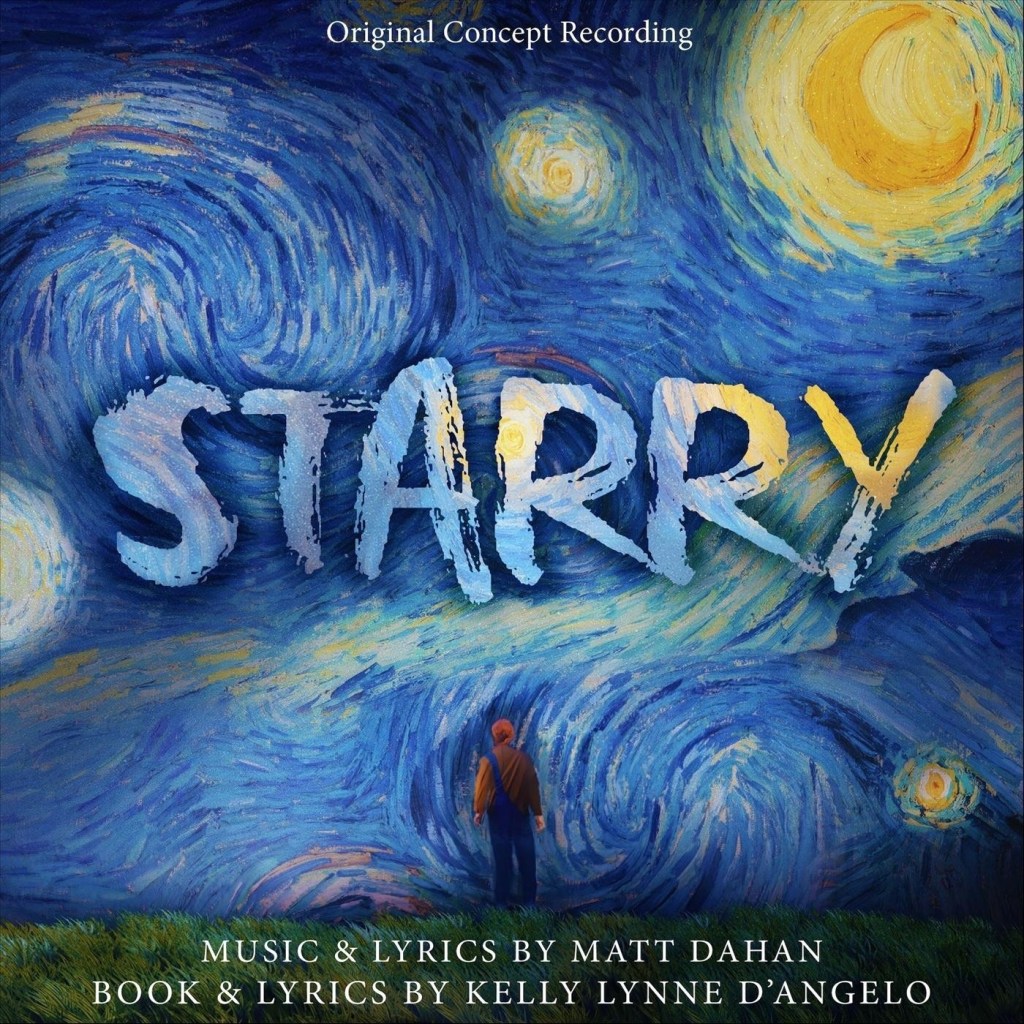
Starry (2019 Original Concept Recording)


The album begins by inviting the listener to “try to catch our eye, show something that we haven’t seen.” A somewhat meta and daring opening line for a concept album by young composer Matt Dahan. Dahan’s rise comes from the LA based theater group StarKid Productions, mostly famous for parody/meme musicals. This albums deviates from StarKid’s formula and introduces some original and enticing melodies surrounding the story of Theo and Vincent van Gogh and their “journey together to find the power of expression.”

After a Dahan takes us into flight with A New Horizon. Continuing with the piano driven pop/rock melodies, A New Horizon speaks of hopefulness and creative agency. By now, just by listening to a couple tracks from the album, I assume Dahan was, in a good way, inspired by the likes of Pasek and Paul, Larson, Schwartz, and Miranda…

Not all songs are strict duets/solos or ensemble numbers. Dahan and lyricist D’Angelo occasionally takes a conversational approach to the verses, much like Rent’s melodic phrasing during sung dialogue. The Sower incorporate various melodies and phrases overlapping themselves through a series of somewhat unexpected chords. Much like Jekyll and Hyde’s Your Work Nothing More or Rent’s Christmas Bells, you can listen to this song over and over again and hear something new each time. It’s wonderful and the last line “and everyone knows you reap what you sow” comes across more emotionally poignant than cliché. This track is my personal favorite from this concept album.

The album allows the listener plenty of time for emotional introspection. Dahan and D’Angelo’s score speaks wildly in favor of creating our own present, and supporting creative freedoms. Amidst the backdrop of the Covid-19 pandemic, and a cultural war in the USA, we are faced with universal uncertainty and fear. The power of creative expression is of upmost importance right now, and we owe it to ourselves to give the gift of creative expression and storytelling to generations to come.

But of course, as most theatres are currently dark, most production of new shows is currently halted. But I definitely have hope that Starry will be picked up by producers and treated to, at very least, an Pre-Broadway trial run.


The show ends tragically and tells us:
“The answer’s in the sky,
“the sight of the starry night makes me free”

Candide (2004 Avery Fisher Hall Concert Cast Recording)

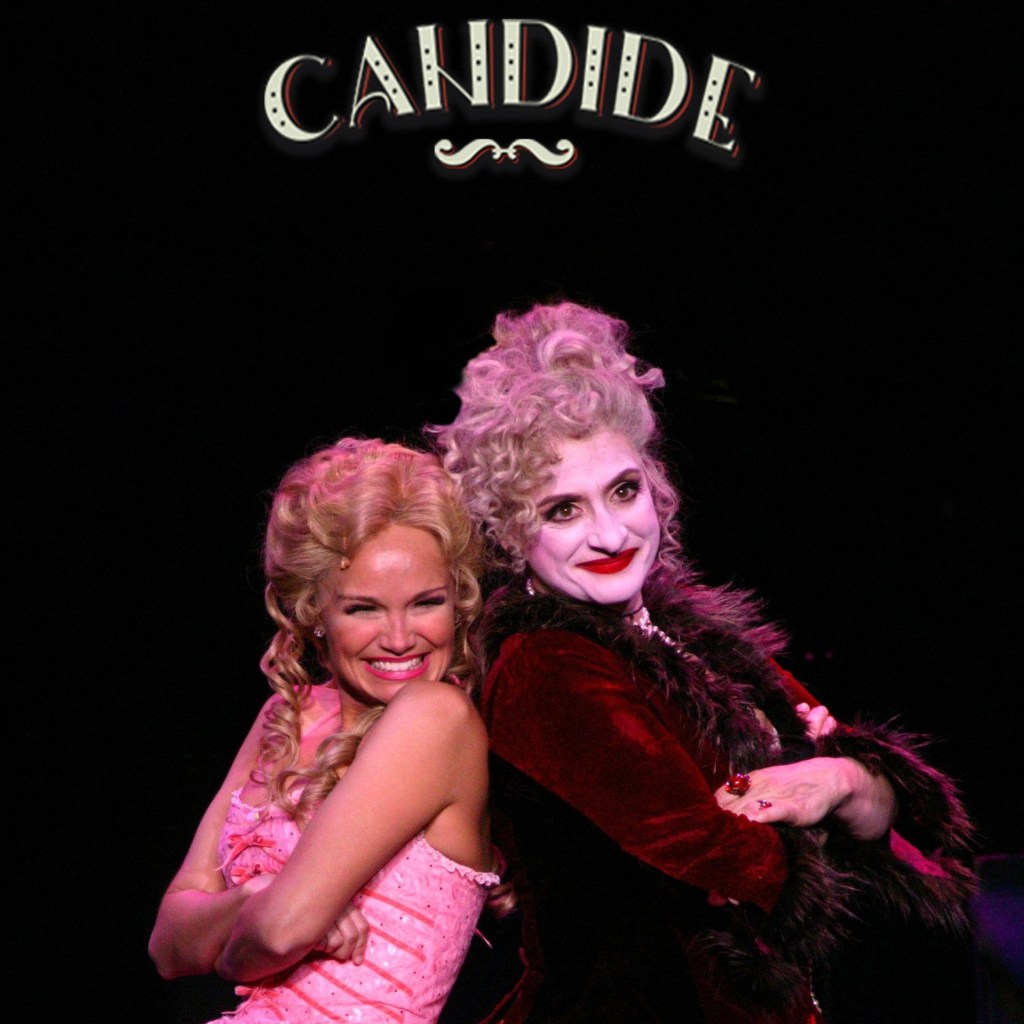
Having premiered one year prior to West Side Story, Candide remains somewhat overshadowed when one looks at Bernstein’s repertoire. This charming Operetta, however, should not be overlooked. Originally critiqued as being rough around the edges back in 1956, Candide evolved over the years and had a major rework back in 1974, which included a new book/libretto. Candide since has become a staple modern operetta for opera companies and musical theaters around the world. The 2004 Avery Fisher Hall concert tells the classic story in a way that is inviting to the wide range of modern audiences.

Kristen Chenoweth is cast as Cunegonde freshly off her hugely successful performance as Glinda in Wicked in 2003. Opera singer Paul Groves is cast as Candide. And the legendary Patti LuPone plays the role of The Old Woman. In 2004 Chenoweth was mostly famous for her high-pitched musical theatre voice and minor television roles. Her background education in opera is showcased as Cunegonde in this festive production. Her first proper duet with Candide is Oh Happy We, where she fantasizes a long happy life with him. This song is a good example of the rolling, melodious phrases that remain a centerpiece of this operetta.

Later on in the first act, we are met with perhaps the most famous piece from this operetta, and a personal favorite of mine, “Glitter and be Gay.” The pure vocal power it takes to execute this aria oftentimes overpowers and deafens the actual humor of the scene. Kristen has no problem with the humor, naturally, while maintaining a strong operatic presence. Kristen breaks the ice in the first line of the song, and she has the crowd rolling in laughter,

“Glitter and be gay, that’s the part I play.
Here I am in Paris, Fraaaaaaaaance…”

Near the end of the aria, after going into fit of madness from her life of luxury, she belts out an impressive sustained high Eb (above high C), which, for me was surprising, as I was not familiar with Chenoweth’s background in Opera. To get the full experience, please see the video I linked at the bottom of the post.

Speaking of humor and divas, Act 2’s We Are Women is a sassy duet between LuPone and Chenoweth. It was a later addition (1989) to the operetta’s score and is sure to deliver a few good laughs. This duet shows off Candide’s “Timelessness,” or rather, its ability to stay current and modern in the hands of a good director. This production is definitely the most Musical Theater version I’ve heard, and despite LuPone and Chenoweth not having an operatic resume, the concert functions quite well as a Musical/Operetta hybrid.

The finale Make Our Garden Grow is the ultimate cherry on top of an absolutely delicious musical. “Garden” is a masterpiece level song and helps solidify Bernstein as one of America’s finest composers. With a simple and heartfelt melody, its hard to not get chills when the choir comes in acapella near the end:

“We’ll build our house and chop our wood,
And make our garden grow”

In summation, in a successful attempt to broaden its audience, Lonny Price’s Candide brings in Musical Theater heavy hitters Chenoweth and LuPone, as well as Opera veterans like Paul Groves, to create a lively, modern, and well adapted presentation. It’s very delightful to see the show withstand the test of time over the years, and despite some of the deviations from more traditional Opera, the cast and musicians are able to capture the beauty, humor, and charm of this Bernstein classic.

And, because once is not enough, here’s Kristen Chenoweth singing Glitter and Be Gay. It’s worth pointing out the athleticism involved with singing this Bernstein aria wearing heels while simultaneously dancing, sitting, laying down, jumping up and down, and using a giant pearl necklace as a lasso, for 7 minutes straight:

Så som i himmelen (2018 Original Stockholm Cast Recording)

Based on the 2004 Swedish Film As It Is In Heaven, this is pop composer Fredrik Kempe’s beautiful freshman musical. Released in 2018, this Stockholm production has added to Sweden’s selection of fine, fine musical work over the decades. This album has been on my regular rotation for a few months now, and I find there to be something pure and, for lack of a better word, heavenly about Kempe’s score.

The album is rich in soaring, choral backdropped, major keyed ballads. The opening number, Den tid jag har, is a simple preview of the soaring melodies we are yet to experience. The song Gabriella’s Song was, with great reason, taken from the original Film’s soundtrack. I always appreciate a nod to the original piece of work (please see: the use of Yann Tiersen’s music in the 2019 Amelie Munich Production), and this song fits right into the score without the slightest off-set. The line “Jag vill känna att jag lever,” or “I want to feel alive,” and specifically the word “känna,” with a consonant/vowel cluster I physically cannot pronounce, gives me frisson every time I hear it.

In the song Stjärnorna (“Stars”), we are literally taken to the sky, and Kempe’s flying melody and beauty of Malena Ernman’s voice holds our hands as we ascend the musical staircase to heaven. As the melody holds steady, we are lifted into another realm entirely when the key changes and Ernman hits notes that I did not know were possible to hit with such force. This song is thrilling to me, and I love the details in the piano, staccato melody, background singers, and tone of the singer, all to artistically dot the sky with stars. This song, for me, is the melodic climax of the entire Score.

This Swedish work is an obvious celebration of life and music. Kempe’s loyalty to the original spirit of the film is impressive and honorable. Gabriella’s Song, and Så som i himmelen itself, gains a home among the Swedish likes of Chess and Kristina från Duvemåla, forever a favorable representation of Swedish Art and Music.

For reference, here is the wonderful Helen Sjöholm singing Gabriella’s Song from the original film:

Les Filles Du Roi (2019 Vancouver Studio Cast)


Not to be overlooked, this is a Trilingual gem out of Vancouver, BC from the young composer Corey Payette. As it was released near the end of 2019, this album has lifted me up on many occasions over the last year. It has quickly become one of my favorites in my collection, and whenever I want to meditate or take pause, I will often listen to a few tracks from this album.

The song Cold Isn’t Permanent is an anthem of the tenacity of the human spirit. Against the harshest of winters, spring will come. In our current political and social climate, this is a message I need to remind myself of every once in a while. A duet between a man and a woman, each person sings solo for the first few minutes, and then come together harmoniously for the last chorus. The ensemble joins in for the finale outro chants, and the song ends with a chilling piano riff.

As kids, we spent our summers not far from Vancouver on the San Juan islands. Before the internet and cell phones, these islands were completely isolating and pristine. Something about it gave me great peace of mind and a feeling of unlimited freedom. The natural beauty of the Pacific Northwest is painted with Payette’s score. In addition to my love for the Northwest, my education background is in Linguistics, so the Trilingual aspect of Payette’s libretto intrigued me quite a bit. This use of multiple languages speaks volumes to the universality of Music. The conjuring of emotions from text that might not be directly understood by the listening (ie, me).

With lyrics in English, French, and Kanien’kéha (Mohawk), and a lush string-heavy score, Payette makes the beauty of the Canadian landscape come alive before my eyes ears. The score is diverse throughout the album, with only a couple reprises here or there, but mostly a broad spectrum of original songs, motifs, and themes

I highly recommend this album.

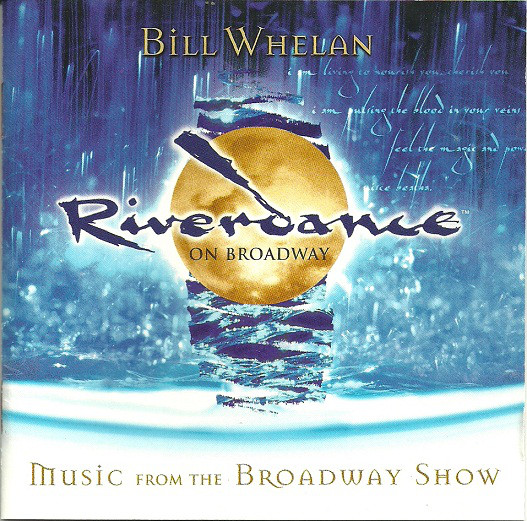
Riverdance (2000 Original Broadway Cast Recording)

First off: Bill Whelan is a genius. As a fan of the original 1995 production, I remember purchasing this album in 2000 with the hope of hearing a fresh new recording of one of my favorite shows, and boy oh boy was I in for a surprise. I really appreciate the creative changes they made, and the Lion King fanboy that was me in 1999 was ever so excited to hear Tsidii Le Loke in her second (and ultimately last…) major broadway appearance. The African Irish Lion King Riverdance Mashup really intrigued me. At present, this music brings me such wonderful nostalgia.

Bill Whelan is known for his technically intricate melodies and diving into unknown tempo/time dimensions. Highlighting this is the title track Riverdance, which I believe is the end of Act 1. The song beckons us in with an Irish siren, heeding us to listen. The singers presumably give the dancers a quick break before the Act 1 Finale Dance Spectacular that is about to happy. Listen below:

Riverdance from Riverdance 2000 Original Broadway Cast Recording

The alternations of tempos and time signatures is quite detailed and, for me, it’s very fun to try to keep up with the downbeats. This song is classic Bill Whelan.

In Act 2 they invited Tsidii Le Loka, of Lion King fame, to write and perform music. It added a much different style to the second half of Riverdance, but it kept with the theme of togetherness and connecting to the global community through dance and music, etc.. Loka’s solo, Amanzi, brings a personal touch to the Riverdance score with her unique songwriting style. Her music is so refreshing and I wish there was more media available of her music. Listen below:

Amanzi from Riverdance 2000 Original Broadway Cast Recording)

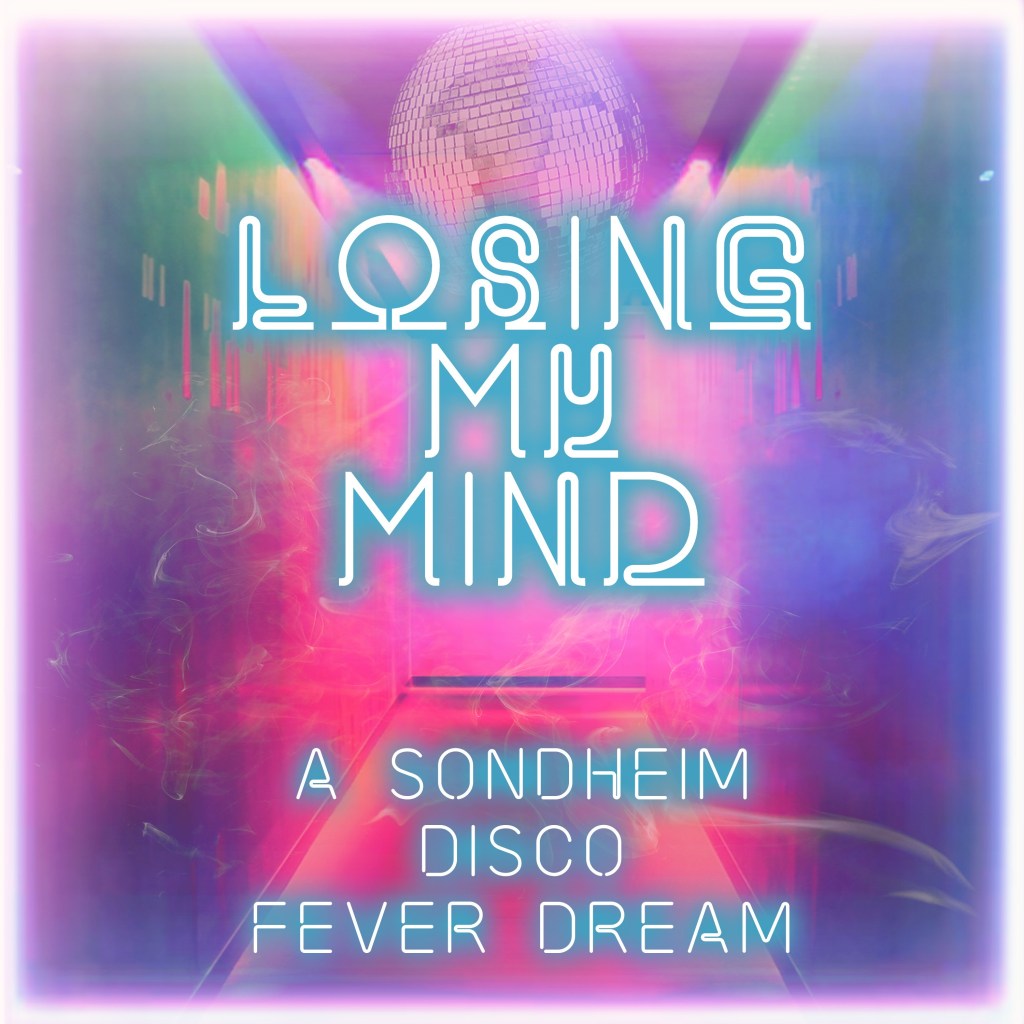
Losing My Mind (2020) ‘A Sondheim Disco Fever Dream’


As the reality of a global pandemic began to settle in, uncomfortably so, in March/April 2020, something amazing happened. Losing My Mind: A Sondheim Disco Fever Dream happened. Seeing my favorite industry go dark so suddenly and for such an indeterminate amount of time really kicked me in the nuts. But this album gave me hope that artists will bounce back, and that magic can still be made with music. Much like many things that happened in 2020, I could not have ever predicted that this album come to fruition. A disco mashup/remix album based on Sondheim’s music? Impossible! But not actually….

The end result really showcases not only Sondheim’s talent in songwriting but very much so his talent of writing words. City On Fire / Hot Up Here exemplifies this to me:

The chorus shouts “City on fire! Rats in the grass!” And so begins one of the more terrifying moments of Sweeney Todd. This section of the libretto is, perhaps, my favorite lyrics Sondheim has written. How does it the sound when mashed-up with Hot in Here from Sunday in the Park with George? Deliciously so.

City on fire! Rats in the grass!
And the lunatics yelling in the streets
“It’s the end of the world!” Yes!
City on fire! Hunchbacks dancing!
Stirrings in the ground
And the whirring of giant wings!
Watch out! Look!
Blotting out the moonlight!
Thick black rain falling on the
City on fire!

This is also an album that speaks to the universally compatible quality of Sondheim’s music. I imagine Sondheim will be relevant for a long time and there will always be ways to re-interpret some of his works. And, despite being literally a disco album, it feels timeless in quality. I know I’ll be able to enjoy this album for years and years to come, and it won’t ever feel dated.

Thank you Joshua Hinck and Scott Wasserman for putting together an album that pays such great tribute to the great American treasure that is Sondheim. His legacy will live on in theatre history forever and this album is proof.

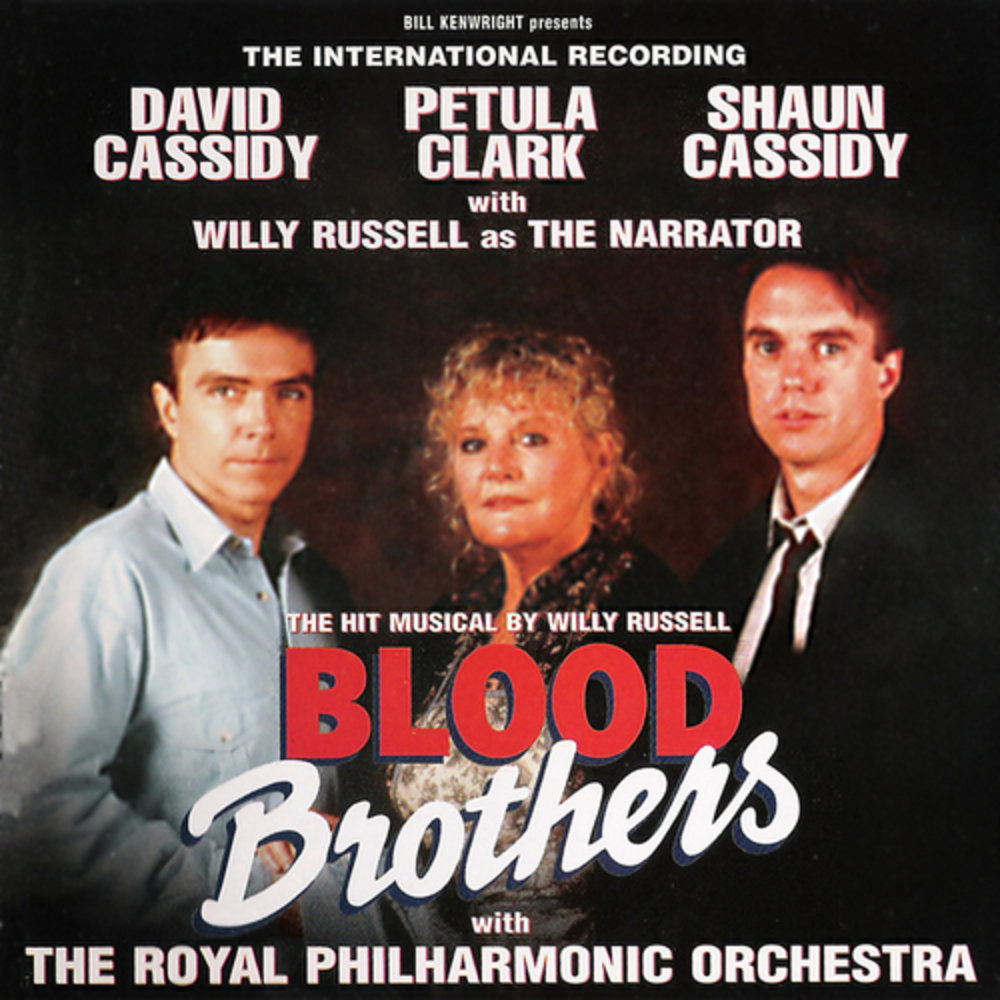
Blood Brothers (1995 “International” Cast Recording)

I am embarrassed to admit that I know very little about Blood Brothers, and I’ve never seen the show live. The score is somewhat foreign to me. I tend to gravitate towards specific composers and explore their work as a whole collection. And Willy Russell has no other works that I am was familiar with. On that note, I don’t have too much to say about the show, other than I’m excited to listen to other recordings and learn more about the show. It’s famous for being one of the longest running productions in history ever, but it doesn’t get a lot of stage time here in the states.

After going through a bit of a Petula Clark binge this month (please refer to my recent post regarding her in Sound of Music), I decided to give Blood Brothers a proper listen, and I was pleasantly surprised. The musical score seems to favor female driven ballads, which surprised me only because of the title of the show, with the male characters holding main roles, but never accented much during “climax” moments in the show.

It’s clear to me that Clark’s performances are the main hook of the album. She starts with Marilyn Monroe & Easy Terms, and then ends Act 1 with Brand New Day, and finishes Act 2 with Tell Me It’s Not True. These big, powerful, female vocal songs provide pinnacle moments in the shows score. And, in my opinion, each song is more beautiful than the next.

Tell Me It’s Not True is great. I can hear it over and over in my head only having heard the song a few times. The tune is so catchy and Petula is superb. She does not rush this finale number, and she allows the song to properly build, with her vocals leading the chorus in lush, rich sadness. This is one song I can listen to on repeat, easy.

Blood Brothers showcases the tragic beauty of devastation and loss. The struggles of a young mother and her ill-fated sons.

Sound of Music, The (1981 London Revival Cast Recording)


It’s hard to analyze Sound of Music without noting Julie Andrews performance in the classic film, so I’ll get the Julie chat out of the way here. Imagine a world where the movie was never made, and the only Maria’s that ever existed were those who played her on stage. Petula Clark would have been Maria 2.0 after Mary Martin’s original Broadway performance in 19XX. 1981 was the beginning of a new era of musical theatre. The decade would soon be defined by Webber, Sondheim, Yeston, Shonburg, and Richard Rodgers was now a full generation past. In the spirit of keeping older shows relevant, I think the 1981 Cast Recording is a fine adaptation of the Rodgers and Hammerstein classic.

The brass fanfare ushers us into the sound of music. Woodwinds chatter amongst the whispering percussion and horns, We are transported to the pristine mountains of Switzerland(?). The helicopter view of Julie Andrews twirling around is embedded in your memory if you were born before 1990. If you never saw the film, just know that it’s amazing. The orchestra builds, and builds, and builds and stops(!) on a single note played on a violin… And Petula Clark’s voice begins:

“My day in the hills has come to an end, I know. [Ding.]”

With this one line, she reaches out and grabs your attention and mesmerizes you for 10 seconds, calming all nerves, and quelling any fears that your expectations won’t be met. Her vocal tone against the horns is so beautiful. She continues to the climax of
“The hills are alive…!” and my heart is full of joy. By the end of the number, she has shown us a full range of dynamics and vocal tone. Clark has a lot of potential for this show, I think. And she gives her own smooth twist on the classic role that I grew up adoring.

Clark’s take on I Have Confidence is unique in that her confidence is not shrouded in nervousness, but rather shrouded in excitement. She begins the song quiet and timid enough, and her nerves come across as eager jitters. For the second half of the show, she’s ecstatic and gives us the Petula Clark belt-and-slur high notes that we can expect. The song ends with an over-the-top Seventy Six Trombones marching band situation, but it’s a good track, and a personal favorite of mine.

As Sound of Music entered the crazy 80s, I believe the music represented Rodgers’ work well, and Petula Clark made the character her own. This is usually my go to album if I’m in the mood for Petula Clark, which is, these days, often.