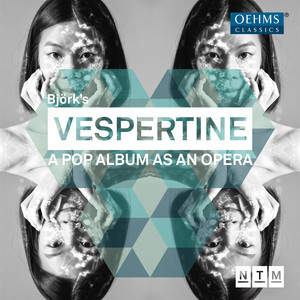
If you were an akward stoner teenager like me in the early 2000s, you probably listened to the original Vespertine, alone with headphones, while watching the snow fall or looking up at the cold, starry night. Even if the snow and stars weren’t literal, it’s impossible not to feel the crunching of the snow under your feet and the twinkle of stars above you in Bjork’s 2001 pop masterpiece Vespertine. An album revolving around micro electronic beats into an opera? How can this work? Bjork’s Vespertine is an electronic pointillistic completely surreal audio experince. Georges Seurat would have loved this album. Every micro beat and boop beep boop sound adds to a growing painting of winter, love, lust, and with the album ending with “Unison,” harmony. But to translate these electropopcorn bites into an opera setting? I had to hear it to believe it.
By the time Pagan Poetry plays, my heart is melting and I realize what a beautiful template Bjork has created for storytelling. Bjork has a history of making weird futuristic concept albums, and this album confirms that Bjork is probably a time traveler, finding melodies out of reach from the normal mind, and bringing it into our lives. The songwriting is something with which nothing can compare. No words can presicely describe the nuances that define Vespertine.
Bjork’s Vespertine as an opera is an earful of magic and wonder. The original lyrics and song order are mostly unchanged, save for a few additions to fill in gaps. The orchestrations and chorus keep your brain fully engaged for the duration of the album.
For me, it’s a time travel back to Aug 2001, a month before the US and world fell to its knees in despair. And we all sought solace in music, art, and prayer. This album is full of hope, dreams, and the artistic vision is clear and present. I highly, highly recommend this album.
“An Echo, A Stain” is my favorite from the opera. It took me years to understand the melody of this song. The baritone/soprano duet version here just… makes the melody soar even higher.
 100+ Years of Musicals